News
A2026-03-31
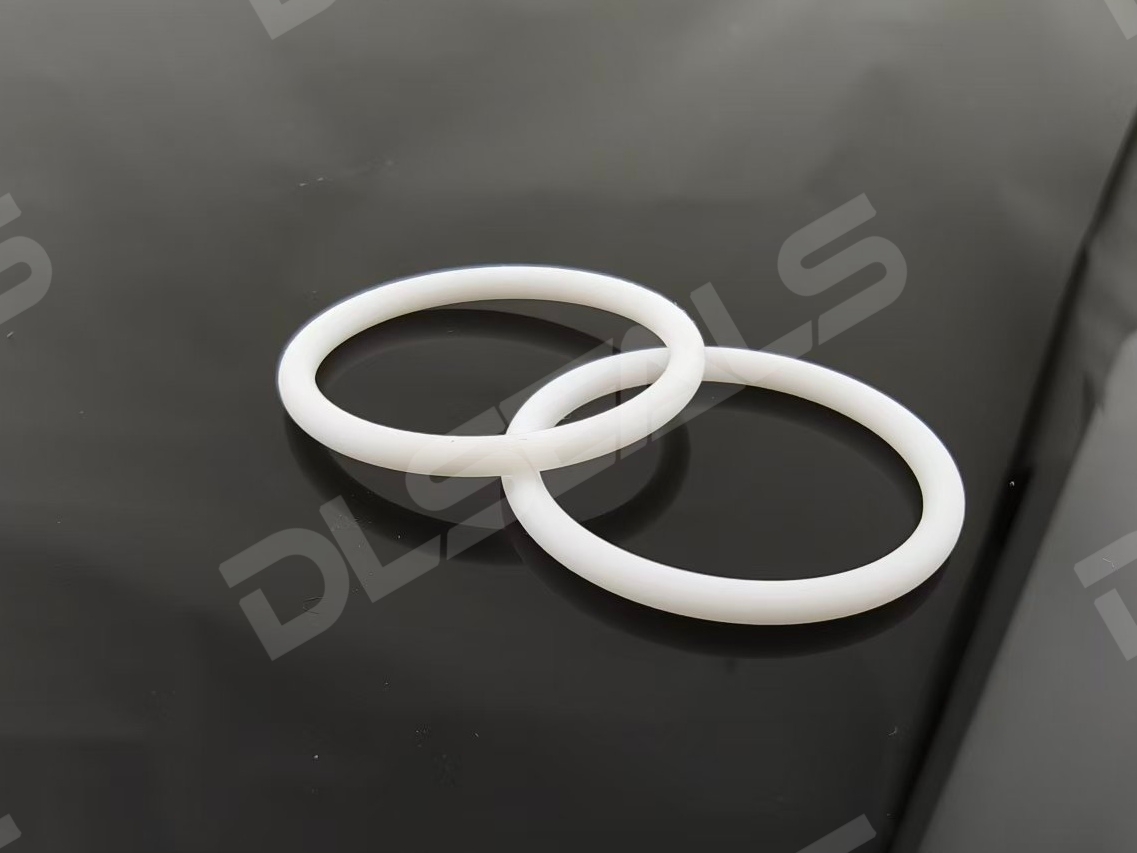
In modern industrial sealing, O-rings are the most ubiquitous components. While elastomers dominate much of the market, PTFE (Polytetrafluoroethylene) O-rings have become an irreplaceable choice when dealing with extreme conditions such as strong corrosion, high temperatures, or cryogenic environments.
Commonly known as "the king of plastics," PTFE endows O-rings with a series of properties that surpass standard elastomers:
Extreme Chemical Stability: Resistant to almost all chemical media (including strong acids, bases, oxidizers, and solvents). It only reacts with a few substances like molten alkali metals and elemental fluorine.
Wide Temperature Range: Capable of long-term stable operation from -200°C to +260°C.
Ultra-Low Friction Coefficient: PTFE possesses excellent self-lubricating properties, reducing breakout torque and preventing "stick-slip" effects.
Superior Dielectric Properties: Maintains stable electrical insulation across various frequencies and temperatures.
Physiological Inertness: Non-toxic and non-contaminating, meeting FDA standards for food and medical grades.
Understanding the fundamental differences between PTFE and elastomers (such as NBR, FKM, or EPDM) is critical for proper selection.
| Property | PTFE O-Rings | Rubber O-Rings |
| Chemical Resistance | Excellent (Universal) | Limited (Material-dependent) |
| Working Temperature | Very Wide (-200°C to +260°C) | Narrower (Typically -40°C to +200°C) |
| Elasticity/Recovery | Poor (Plastic deformation) | Excellent (High compression set resistance) |
| Installation Ease | Low (Hard; requires tools/open grooves) | High (Elastic; easy to stretch) |
| Sealing Principle | Relies on contact pressure/preload | Relies on elastic memory/rebound |
| Friction | Ultra-low | Higher (Requires lubrication) |
No Aging: PTFE is unaffected by ozone, UV, or weathering; shelf life is virtually infinite.
No Contamination: No additives or plasticizers that could leach into and contaminate the fluid.
Lack of Resiliency: This is the primary limitation. As a hard plastic, it does not "spring back" well after deformation.
Cold Flow (Creep): Under constant heavy pressure, PTFE may slowly undergo permanent deformation.
PTFE O-rings are typically used in positions where rubber fails:
Chemical & Pharmaceutical: Pumps, valves, and reactors handling aqua regia, strong alkalis, or high-purity reagents.
Semiconductor Manufacturing: Vacuum and etching equipment requiring extreme cleanliness and zero outgassing.
Aerospace: Cryogenic fuel systems or liquid oxygen environments.
Food & Beverage: Filling equipment and high-temperature steam cleaning environments.
Composite Solutions: To compensate for the lack of elasticity, engineers often use Encapsulated O-Rings (FEP/PFA jacket over a rubber core) or Spring Energized Seals.
Groove Design: Grooves for PTFE should be slightly wider to accommodate thermal expansion.
Installation Care: Use tapered mandrels for installation. Avoid sharp metal tools that could scratch the PTFE surface, which would lead to leak paths.
[DLSEALS kindly Reminder] Sealing issues? Turn to DLSEALS! As a sealing component manufacturer, we specialize in customizing sealing components, providing a full range of services from design, research and development, production, testing, and more. If you have more information you'd like to know, feel free to contact us directly. DLSEALS's product experts are dedicated to serving you!

GUANGDONG DLSEALS TECHNOLOGY CO.,LTD.
TEL/Whatsapp
:+86 15918359971ADDRESS
:No. 2 Niujiaokeng Road, Baizhoubian, Dongcheng District, Dongguan, Guangdong, China.