News
A2026-03-30
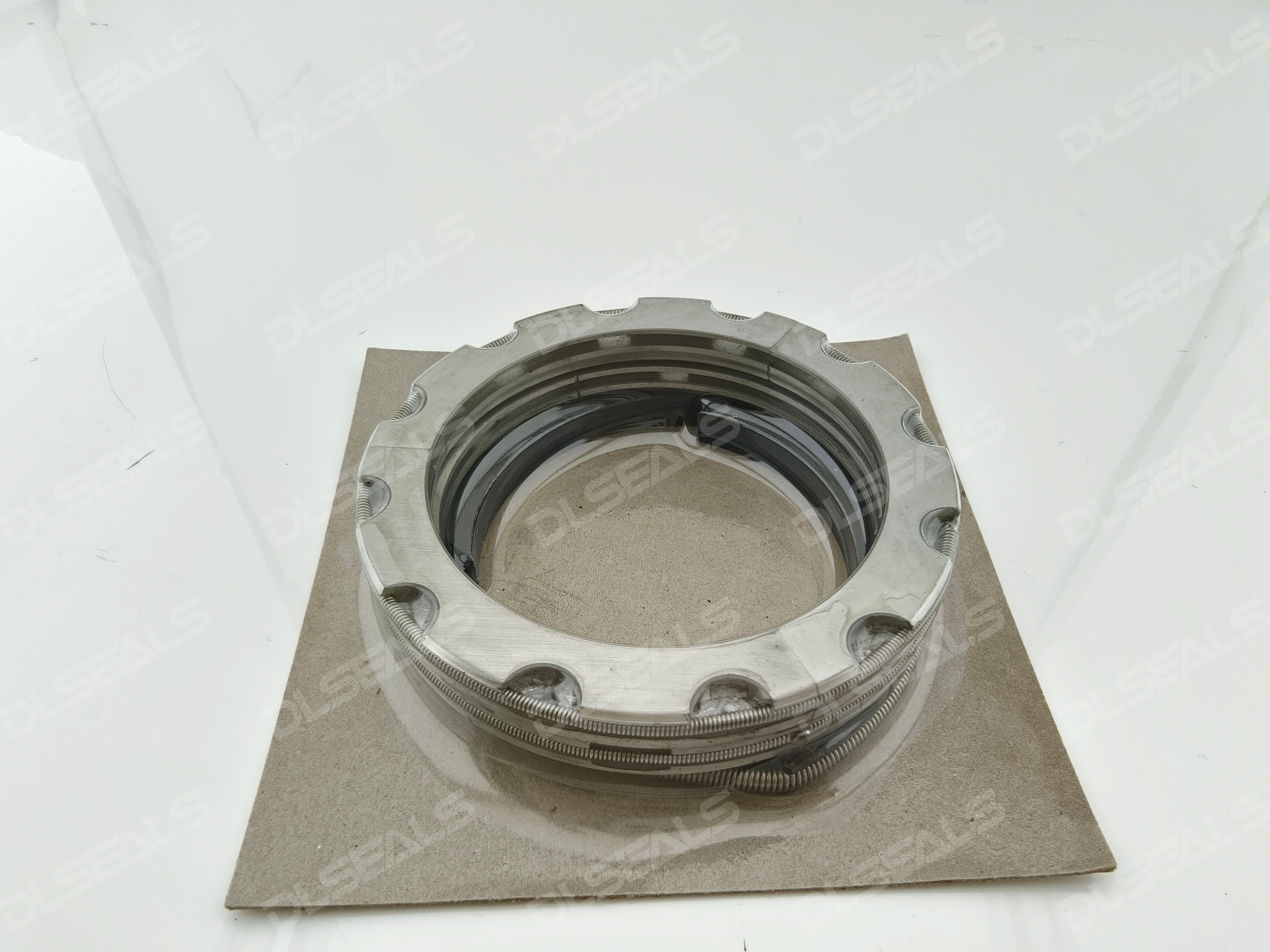
In the core structure of a reciprocating compressor, while piston rings handle "gas sealing," oil scraper rings manage "liquid control." Although they don't directly compress gas, their performance dictates operating costs, discharge air quality, and equipment lifespan.
Located in the intermediate section or stuffing box, scraper rings perform two vital tasks:
Preventing Oil Loss: Stopping crankcase oil from "climbing" the piston rod into the cylinder.
Oil Recovery: Scraping excess oil from the rod surface and directing it back to the oil reservoir.
A scraper ring is a precision assembly consisting of segmented rings, a garter spring (to provide constant radial tension), and a scraping edge.
Physical Mechanism: As the piston rod moves back and forth, the sharp edge of the ring applies a specific contact pressure to the rod surface. Based on hydrodynamic lubrication theory, the oil film is effectively severed only when the contact pressure exerted by the ring is greater than the dynamic pressure of the oil film. The oil is then collected and drained back through return holes.
Cast Iron/Bronze: High strength, ideal for high-pressure/heavy-duty units.
Filled PTFE: Excellent self-lubrication, used in non-lubricated or mini-lube compressors.
PEEK: High strength and chemical resistance for corrosive process gases.
[DLSEALS kindly Reminder] Sealing issues? Turn to DLSEALS! As a sealing component manufacturer, we specialize in customizing sealing components, providing a full range of services from design, research and development, production, testing, and more. If you have more information you'd like to know, feel free to contact us directly. DLSEALS's product experts are dedicated to serving you!

GUANGDONG DLSEALS TECHNOLOGY CO.,LTD.
TEL/Whatsapp
:+86 15918359971ADDRESS
:No. 2 Niujiaokeng Road, Baizhoubian, Dongcheng District, Dongguan, Guangdong, China.