News
A2026-11-26
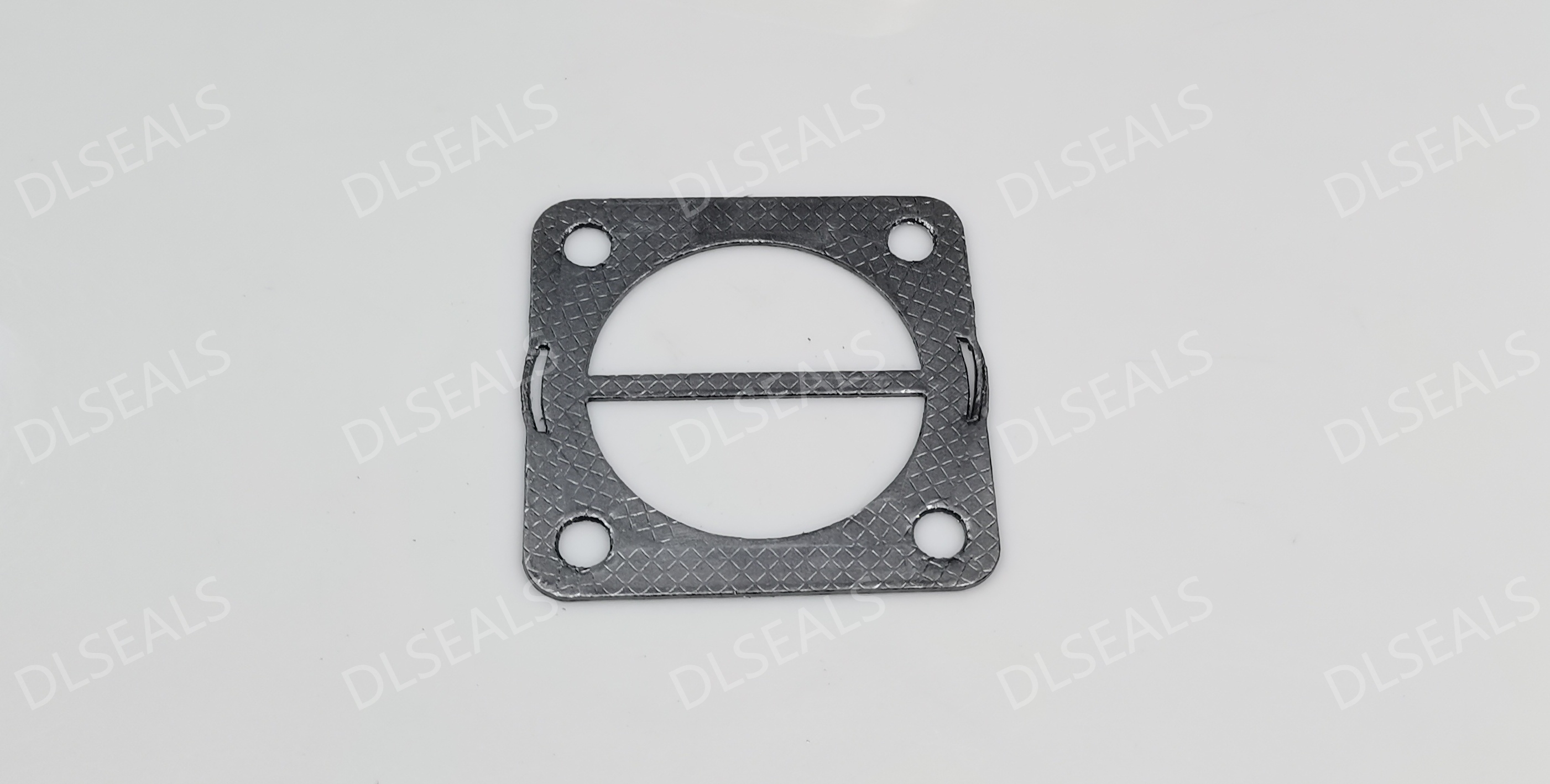
In industrial sealing applications, gaskets play an essential role in preventing fluid leakage and ensuring the safe operation of equipment. Asbestos gaskets were once widely used in pipelines, valves, pumps, pressure vessels, and other equipment due to their good heat resistance, pressure resistance, and sealing performance. However, as occupational health and environmental protection requirements have become increasingly stringent, the serious health risks associated with asbestos fibers have received greater attention. Non-asbestos gaskets have therefore become an important alternative in the industrial sealing industry.
What are the main differences between non-asbestos and traditional asbestos gaskets? Can non-asbestos gaskets completely replace asbestos gaskets? And how should the appropriate material be selected for actual operating conditions?
Asbestos gaskets are generally manufactured by mixing asbestos fibers with rubber binders. The mixture is processed through pressing, vulcanization, and other manufacturing procedures to produce gasket sheets, which are then cut into different shapes and dimensions. Asbestos fibers provide heat resistance and reinforcement, helping the gasket maintain sealing performance under certain temperature and pressure conditions.
Non-asbestos gaskets do not contain asbestos fibers. Instead, they use alternative reinforcing fibers combined with rubber binders. Common reinforcing materials include aramid fibers, mineral fibers, glass fibers, and other synthetic fibers. The binder is generally selected from NBR, SBR, or other suitable rubber systems according to the intended application.
By combining different fibers and rubber formulations, non-asbestos gaskets can be engineered for specific media, temperatures, and pressure conditions.
| Comparison | Asbestos Gaskets | Non-Asbestos Gaskets |
|---|---|---|
| Main reinforcing materials | Asbestos fibers | Aramid fibers, mineral fibers, glass fibers, etc. |
| Binder materials | Generally rubber binders | NBR, SBR, and other suitable rubber systems |
| Heat resistance | Generally good heat resistance | Depends on fiber and binder formulations |
| Sealing performance | Established performance in traditional industrial applications | Can meet various sealing requirements through formulation and structural design |
| Mechanical properties | Good reinforcement and compression characteristics | Strength and recovery properties vary with fiber formulation |
| Health risks | Asbestos fibers pose serious health hazards | Eliminates the risks associated with asbestos fiber exposure |
| Environmental and regulatory considerations | Strictly restricted or prohibited for many applications in numerous countries and regions | More consistent with the modern transition toward asbestos-free materials |
It is important to understand that non-asbestos gaskets are not a single material but a category of composite materials. Fiber composition, rubber systems, filler ratios, and manufacturing processes can vary significantly between manufacturers. Therefore, the term "non-asbestos" alone does not indicate a specific performance grade.
Traditional asbestos gaskets provide effective fiber reinforcement and can form a stable sealing contact surface under appropriate compressive loads. Their material structure can accommodate a certain degree of flange surface irregularity, which made them widely used in industrial pipelines and equipment connections.
Non-asbestos gaskets use materials such as aramid and mineral fibers for reinforcement, while rubber binders improve compressibility and sealing contact. With optimized formulations, modern non-asbestos gasket sheets can achieve sealing performance comparable to traditional asbestos gaskets in many conventional industrial applications.
The main differences in mechanical performance include:
Compression characteristics: The compressibility of non-asbestos gaskets depends on fiber type, binder formulation, and material density. Different formulations behave differently under installation loads.
Recovery characteristics: Elastic recovery after unloading affects the gasket's ability to compensate for minor flange movement and pressure fluctuations. The recovery properties of the specific material should be evaluated.
Creep resistance: Long-term exposure to elevated temperatures and compressive loads may cause stress relaxation, reducing sealing contact pressure. Non-asbestos formulations can differ significantly in this respect.
Media resistance: Oil, solvent, acid, and alkali resistance mainly depend on the rubber binder and fiber combination. Not all non-asbestos gaskets have the same chemical compatibility.
When selecting non-asbestos gaskets, engineers should therefore evaluate not only the material designation but also compression, recovery, tensile strength, creep relaxation, and chemical compatibility.
Asbestos fibers themselves have good heat resistance. However, this does not mean that traditional asbestos-rubber gaskets can be used at any high temperature. Their actual operating limits are also affected by the rubber binder, material structure, and working environment.
The temperature and pressure capabilities of non-asbestos gaskets depend more heavily on their specific formulations. For example:
Aramid fiber non-asbestos gaskets: Offer good mechanical strength and compression resistance. They are suitable for many industrial pipeline, pump, and valve connections.
Mineral fiber non-asbestos gaskets: Depending on the binder system, they can be used for industrial sealing within certain temperature ranges. Their actual performance should be verified against product data.
Glass fiber-reinforced gaskets: Provide good dimensional stability and reinforcement. However, the fiber structure, binder, and compatibility with the working medium must be considered.
The following operating conditions require particular attention during selection:
| Operating Condition | Key Selection Considerations |
|---|---|
| Ambient-temperature water and air pipelines | Compression characteristics, sealing contact pressure, and long-term stability |
| Hydraulic oil and lubricating oil systems | Oil resistance of the rubber binder and compatibility with the working medium |
| Steam pipelines | Strength retention at elevated temperatures, creep relaxation, and thermal cycling performance |
| Chemical process pipelines | Chemical resistance of the fibers and binder |
| High-temperature and high-pressure equipment | Product temperature-pressure ratings, flange loading, and leakage test results |
It should be emphasized that not all non-asbestos gaskets can directly replace existing asbestos gaskets. For high-temperature steam, high-pressure fluids, highly corrosive media, and applications involving frequent temperature changes, selection must be verified against specific product data and actual operating conditions.
The greatest disadvantage of asbestos is not its sealing performance, but the serious long-term health risks it poses.
During asbestos mining, processing, installation, removal, and maintenance, fibers may be released into the air. When inhaled, these fibers can remain in the lungs for extended periods and increase the risk of serious diseases such as asbestosis, lung cancer, and mesothelioma.
In particular, during equipment maintenance, the removal, cutting, and cleaning of old asbestos gaskets may generate airborne fiber dust, exposing maintenance personnel to occupational health risks.
Non-asbestos gaskets replace asbestos fibers with alternative reinforcing materials, eliminating the specific risks associated with asbestos fiber exposure and better meeting modern occupational health and environmental protection requirements.
However, asbestos-free does not mean completely harmless or dust-free. Some non-asbestos products may still contain mineral fibers, glass fibers, or other powdered materials. Appropriate occupational protection measures should therefore be used during machining, removal, and handling.
With the development of industrial sealing materials, non-asbestos gaskets can now meet many of the application requirements traditionally addressed by asbestos gaskets. They are particularly suitable for conventional water, oil, air, and certain industrial chemical pipeline connections.
However, this does not mean that every application can be replaced directly.
The following factors should be verified during replacement:
Media compatibility: Confirm that the fibers and rubber binder in the new gasket are compatible with the actual working medium.
Temperature and pressure: Ensure that the new material meets the actual operating temperature, design pressure, and pressure fluctuation requirements.
Flange configuration: Check flange dimensions, sealing face type, surface roughness, and gasket thickness.
Installation load: Confirm that the required compressive stress is compatible with the existing bolts and flange structure.
Long-term stability: Evaluate creep relaxation at elevated temperatures, thermal cycling, and the risk of long-term leakage.
For critical equipment or high-risk operating conditions, replacement should be evaluated through material performance data, sealing tests, and actual operating validation rather than simply matching the dimensions of the original gasket.
The main differences between non-asbestos and asbestos gaskets lie in their reinforcing fiber materials, associated health risks, and resulting performance characteristics. Traditional asbestos gaskets once played an important role in industrial sealing, but the health hazards of asbestos fibers have driven the development of alternative asbestos-free sealing materials.
Modern non-asbestos gaskets combine aramid fibers, mineral fibers, glass fibers, and other reinforcing materials with different rubber systems to meet the sealing requirements of a wide range of industrial equipment. When properly selected, they can replace traditional asbestos gaskets in many applications.
For equipment manufacturers and maintenance personnel, gasket selection should not be based solely on material names or price. Working media, temperature, pressure, flange configuration, and long-term sealing reliability must all be considered. Only when material properties are properly matched to actual operating conditions can safe, stable, and durable sealing performance be achieved.
[DLSEALS kindly Reminder] Sealing issues? Turn to DLSEALS! As a sealing component manufacturer, we specialize in customizing sealing components, providing a full range of services from design, research and development, production, testing, and more. If you have more information you'd like to know, feel free to contact us directly. DLSEALS's product experts are dedicated to serving you!

GUANGDONG DLSEALS TECHNOLOGY CO.,LTD.
TEL/Whatsapp
:+86 15918359971ADDRESS
:No. 2 Niujiaokeng Road, Baizhoubian, Dongcheng District, Dongguan, Guangdong, China.