News
A2026-01-29
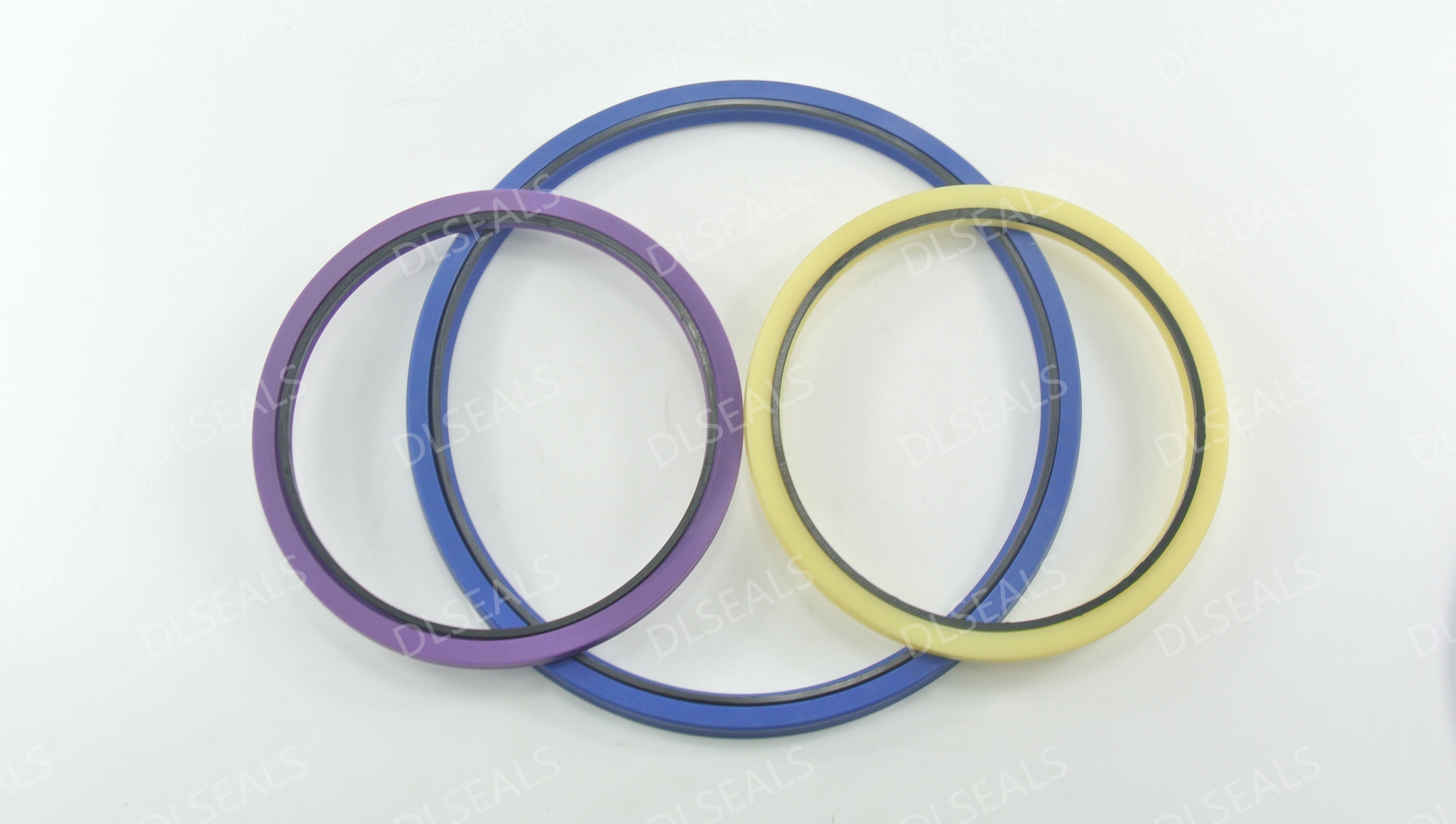
In hydraulic and pneumatic systems, seals are critical components that ensure efficient system operation. Among them, the Glyd Ring and Stepseal (also known as Step Seal) are common composite seals widely used for piston and piston rod sealing. Although both share similarities in materials and basic structure, there are significant differences in their design principles, sealing methods, and application scenarios. Correctly distinguishing and selecting the appropriate seal can effectively improve system sealing performance, reduce friction, and extend service life. This article provides a detailed explanation from the perspectives of definition, structure, performance parameters, applications, and differentiation methods to help engineers and technicians better understand and apply these two types of seals.
The Glyd Ring is a double-acting seal primarily composed of a rectangular cross-section slide ring made of high-wear-resistant polytetrafluoroethylene (PTFE) composite material and an O-ring rubber seal. The O-ring serves as a preloading element, providing sufficient sealing force and compensating for wear on the slide ring. This design makes the Glyd Ring suitable for piston sealing in hydraulic cylinders, enabling bidirectional sealing—that is, it can withstand pressure from both directions simultaneously.
The advantages of the Glyd Ring include low friction, no stick-slip (creeping), small startup force, and high pressure resistance, making it suitable for applications requiring bidirectional sealing.
The Stepseal (Step Seal) is a single-acting seal composed of a stepped PTFE slide ring and an O-ring rubber seal. The O-ring provides sealing force and compensates for wear on the slide ring. It is suitable for piston rod sealing in hydraulic cylinders and can only seal pressure in one direction.
The Stepseal features good heat dissipation, extrusion resistance, wear resistance, and low friction, making it suitable for high-pressure, high-speed unidirectional sealing environments such as industrial vehicles and construction machinery.
Although both are composite seals of PTFE and O-ring, they can be distinguished through the following aspects:
In practice, quick identification can be achieved by observing the cross-section shape (rectangular vs. stepped) and O-ring position (outer vs. inner). If conditions allow, refer to the manufacturer's technical manual or conduct pressure tests to verify the sealing direction.
As core components in the field of hydraulic sealing, Glyd Ring and Stepseal differ primarily in sealing action, structural design, and application positioning. Engineers should select based on system pressure direction, motion type, and environmental conditions. For example, prioritize Glyd Ring in bidirectional high-pressure environments and Stepseal in high-speed unidirectional rod sealing. Correct differentiation and application of these seals not only optimizes system performance but also reduces maintenance costs. In the future, with advancements in materials science, the performance boundaries of these two seals will continue to expand, offering more possibilities for industrial applications.
[DLSEALS kindly Reminder] Sealing issues? Turn to DLSEALS! As a sealing component manufacturer, we specialize in customizing sealing components, providing a full range of services from design, research and development, production, testing, and more. If you have more information you'd like to know, feel free to contact us directly. DLSEALS's product experts are dedicated to serving you!

GUANGDONG DLSEALS TECHNOLOGY CO.,LTD.
TEL/Whatsapp
:+86 15918359971ADDRESS
:No. 2 Niujiaokeng Road, Baizhoubian, Dongcheng District, Dongguan, Guangdong, China.