News
A2026-05-12
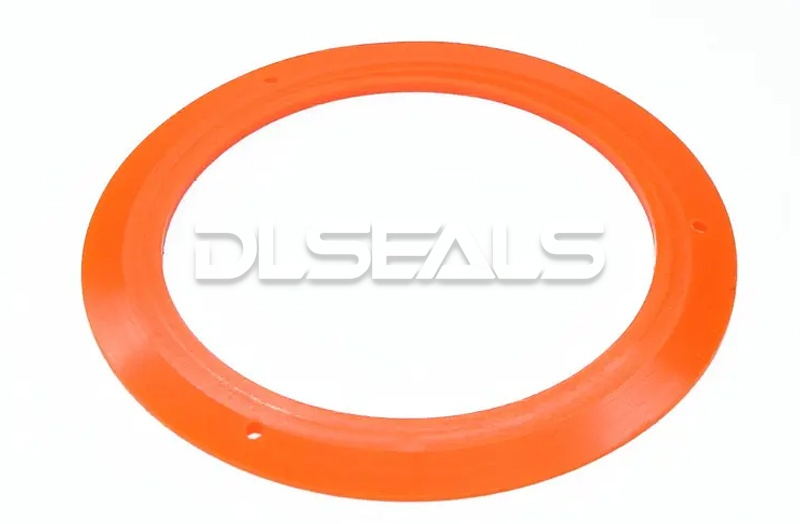
In modern industrial sealing systems, conventional metal gaskets offer excellent mechanical strength but often face limitations in corrosion resistance, flexibility, and compatibility with aggressive media. On the other hand, non-metallic or rubber gaskets may suffer from compression set, insufficient pressure resistance, and reduced long-term stability.
To overcome these challenges, encapsulated flat gaskets have become an increasingly important sealing solution in high-performance industrial applications. By combining the structural strength of internal core materials with the chemical resistance of advanced fluoropolymer coatings, these composite gaskets provide both durability and reliable sealing performance under demanding operating conditions.
An encapsulated flat gasket is a composite sealing component consisting of an internal core material enclosed within a protective outer layer made from high-performance fluoroplastics such as PTFE, FEP, or PFA.
Its structure generally includes:
This dual-layer design enables the gasket to achieve:
Encapsulated flat gaskets are widely used in:
In a fully encapsulated structure, the internal core is completely sealed inside the fluoropolymer layer, preventing direct contact between the process media and the core material.
Key advantages include:
Typical applications include:
Semi-encapsulated gaskets expose part of the internal support structure while protecting the primary sealing surfaces.
Their characteristics include:
However, their corrosion resistance is generally lower than that of fully encapsulated designs.
PTFE (Polytetrafluoroethylene) is the most widely used encapsulation material due to its excellent chemical stability.
Main features include:
PTFE encapsulated gaskets are commonly used in:
One limitation of PTFE is cold flow under prolonged high-pressure conditions, which must be considered during system design.
FEP offers superior thermal processing properties, allowing for more uniform and seamless encapsulation.
Advantages include:
However, its temperature resistance is slightly lower than PTFE.
PFA combines the high-temperature resistance of PTFE with the processability of FEP.
Its primary advantages include:
The main drawback is its relatively high material cost.
The fluoropolymer outer layer provides exceptional resistance against:
This makes encapsulated flat gaskets ideal for corrosive industrial environments.
The flexible outer layer compensates for minor flange surface imperfections, helping maintain reliable sealing performance.
Compared with conventional metal gaskets, they offer:
Fluoropolymer materials exhibit excellent chemical inertness and minimal extractables, making them suitable for:
Encapsulation materials typically provide excellent resistance to:
This contributes to extended service life and long-term sealing stability.
Although highly effective, encapsulated flat gaskets are not suitable for every operating condition.
Because fluoropolymer materials may experience creep or cold flow under extreme pressure, improper application can lead to:
Proper flange design, compression control, and groove configuration are therefore essential.
Improper installation conditions such as:
may damage the encapsulation layer and reduce sealing performance.
Careful installation procedures are critical to ensuring long-term reliability.
Used in:
where leakage prevention and corrosion resistance are critical.
Ultra-pure chemical delivery systems require extremely low contamination levels.
PFA encapsulated gaskets help achieve:
These gaskets are suitable for:
while meeting stringent sanitary sealing requirements.
Certain encapsulated gasket designs feature low gas permeability and are used in:
When selecting encapsulated flat gaskets, engineers should evaluate:
| Parameter | Key Consideration |
|---|---|
| Media Compatibility | Chemical corrosion resistance |
| Operating Temperature | Material temperature limits |
| Operating Pressure | Compression and creep resistance |
| Flange Type | Surface design and sealing geometry |
| Cleanliness Requirements | Food-grade or semiconductor-grade standards |
| Installation Space | Dimensional and structural limitations |
Additional factors include:
As industrial systems continue to demand higher cleanliness, durability, and reliability, encapsulated flat gasket technology is evolving toward:
Emerging industries such as hydrogen energy, semiconductor manufacturing, and advanced chemical processing are also driving demand for customized encapsulated sealing solutions.
Encapsulated flat gaskets combine the mechanical strength of internal support materials with the outstanding chemical resistance of fluoropolymer encapsulation, making them an ideal sealing solution for corrosive, high-purity, and demanding industrial environments.
[DLSEALS kindly Reminder] Sealing issues? Turn to DLSEALS! As a sealing component manufacturer, we specialize in customizing sealing components, providing a full range of services from design, research and development, production, testing, and more. If you have more information you'd like to know, feel free to contact us directly. DLSEALS's product experts are dedicated to serving you!

GUANGDONG DLSEALS TECHNOLOGY CO.,LTD.
TEL/Whatsapp
:+86 15918359971ADDRESS
:No. 2 Niujiaokeng Road, Baizhoubian, Dongcheng District, Dongguan, Guangdong, China.