News
A2026-08-03
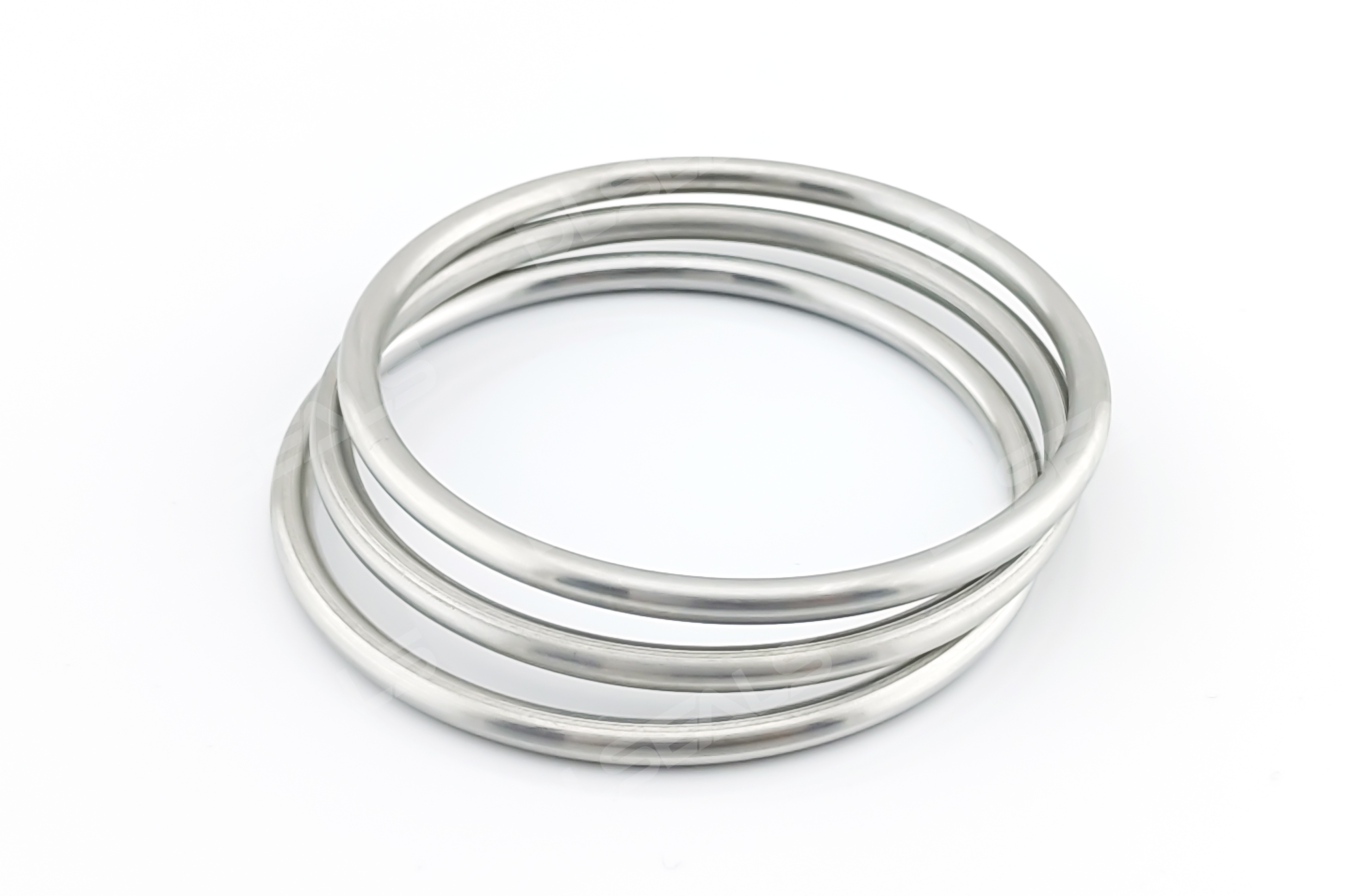
In modern industrial and advanced technology sectors, temperature is often a hard metric for evaluating the limits of materials and engineering. When ambient temperatures surge to 800°C, the vast majority of traditional organic sealing materials (such as rubber, fluoroelastomers, silicone, etc.) decompose, carbonize, or burn away in seconds. Achieving long-term, zero-leakage sealing under such severe, red-hot operating conditions has become one of the most critical core technologies in high-end equipment manufacturing.
Sealing solutions tailored for the extreme 800°C range must not only withstand severe thermal stress and thermal expansion, but also address complex challenges including high-temperature oxidation, creep relaxation, and aggressive media corrosion.
At 800°C, the physical properties of materials and structures change fundamentally, creating four major pain points for sealing systems:
High-Temperature Material Failure: High polymers lose their function entirely, and even standard stainless steels (e.g., 304, 316) lose mechanical strength due to severe oxidation and flaking.
Thermal Expansion & Thermal Stress: Sealing interfaces (such as pipes and flanges) undergo uneven thermal expansion at elevated temperatures, dynamically altering sealing gaps.
High Thermal Creep Relaxation: Under high temperatures and continuous preload, sealing elements suffer permanent plastic deformation, causing initial preload to decay and leading to leaks.
Aggressive Media Erosion & Corrosion: 800°C environments are often accompanied by supercritical steam, high-temperature flue gas, molten salt, or reducing gases, which exert strong chemical corrosion and physical erosion on sealing components.
To tackle 800°C extreme operating conditions, the industry has evolved three primary technical approaches based on distinct material and structural configurations:
Under conditions where extreme high pressure and temperature coexist, metal seals are the top choice for achieving continuous zero-leakage performance.
Core Materials: Nickel-based superalloys (e.g., Inconel 600 / 718 / X-750), cobalt-based alloys (Haynes 25), and titanium-aluminum alloys.
Structural Forms:
Metal C-Rings / O-Rings: Utilize the elastic recovery force of hollow or open metallic tubes to achieve tight contact on sealing faces.
Metal-Jacketed Gaskets & Expansion Joints: Feature an outer layer made of heat-resistant alloys filled internally with specialized inorganic materials.
Key Advantages: Strong creep resistance, extreme high-pressure tolerance, and long service life.
Leveraging the high-temperature resistance of inorganic minerals, modification techniques extend their operational limits.
Oxidation-Inhibited Modified Graphite: Blended with inorganic corrosion inhibitors (e.g., phosphates, borates), allowing graphite to retain flexibility and resilience at 800°C in mildly oxidizing or inert atmospheres.
Ceramic / Phlogopite Mica Composite Gaskets: Utilizing Phlogopite mica bound with special high-temperature adhesives, these gaskets withstand temperatures up to 900°C–1000°C, delivering superior gas tightness and fire safety.
Key Advantages: High oxidation resistance, excellent conformability, and outstanding fire performance.
Ideal for low-pressure, dynamic, or large-gap high-temperature sealing (such as kilns, furnaces, and flue gas dampers).
Core Materials: Alumina fibers ($\text{Al}_2\text{O}_3$), silica fibers ($\text{SiO}_2$), and silicon carbide ($\text{SiC}$) fabrics.
Structural Forms: Braided ropes, gland packings, sleeves, and woven tapes.
Key Advantages: Ultra-low thermal conductivity and superior thermal shock resistance, capable of continuous operation from 800°C up to 1200°C.
| Seal Type | Operating Temp Range | Pressure Tolerance | Leakage Rate Level | Core Advantages |
| Nickel-Based Metal C-Ring | -200°C to 850°C | Ultra-High (>100 MPa) | Extremely Low (Minimal Leakage) | Creep resistant, high-pressure capable, compact structure |
| Modified Mica Composite Gasket | -200°C to 1000°C | Medium-High (10–20 MPa) | Low | Strong oxidation resistance, fireproof, cost-effective |
| Alumina Ceramic Fiber Packing | Up to 1200°C | Low (<1 MPa) | Moderate | Lightweight, highly insulating, thermal shock resistant |
The demand for extreme 800°C sealing is widespread across modern frontier industrial sectors:
Mainly applied in gas turbines, rocket nozzles, and thermal protection systems (TPS) for hypersonic vehicles. For instance, dynamic and static seals between gas turbine combustion chambers and turbine discs directly determine engine thermal efficiency and thrust-to-weight ratio.
Applied in 4th-generation High-Temperature Gas-Cooled Reactors (HTGR) and Concentrated Solar Power (CSP) systems using molten salt. In CSP, 800°C molten salt serves as the heat transfer fluid, placing extreme demands on valve and flange seals regarding corrosion and heat resistance. In HTGRs, high-pressure, high-temperature helium seals directly safeguard nuclear reactor operation.
Widely used in high-temperature ethylene cracking furnaces, waste incinerators, and hydrogen production reactors. Operating under long-term exposure to high heat, corrosive gases, and frequent thermal cycling, these systems require sealing gaskets with exceptional resistance to oxidation and creep relaxation.
As industrial equipment progresses toward higher temperatures, elevated pressures, and stricter environmental standards, 800°C sealing technology is advancing along the following avenues:
Self-Adaptive & Dynamic Compensation Structures: Combining metal bellows with shape memory alloys (SMA) enables sealing systems to self-tighten and compensate elastically during thermal cycling, reducing preload loss.
High-Temperature Nanocoatings & Self-Lubrication: Depositing TiAlN, CrN, or high-temperature self-lubricating coatings on metal seal surfaces prevents dry friction and galling/galling-lockup at elevated temperatures.
Digital Twins & Smart Predictive Maintenance: Integrating micro strain and leakage sensors to monitor creep relaxation and predict the remaining useful life of sealing systems in real time.
Sealing at 800°C is far more than manufacturing a gasket or an O-ring—it is a multidisciplinary engineering challenge incorporating materials science, thermodynamics, structural mechanics, and surface engineering. As breakthroughs continue in nickel-based superalloys, ceramic composites, and precision manufacturing, 800°C sealing solutions will keep pushing industrial boundaries, laying a solid safety foundation for next-generation advanced equipment.
[DLSEALS kindly Reminder] Sealing issues? Turn to DLSEALS! As a sealing component manufacturer, we specialize in customizing sealing components, providing a full range of services from design, research and development, production, testing, and more. If you have more information you'd like to know, feel free to contact us directly. DLSEALS's product experts are dedicated to serving you!

GUANGDONG DLSEALS TECHNOLOGY CO.,LTD.
TEL/Whatsapp
:+86 15918359971ADDRESS
:No. 2 Niujiaokeng Road, Baizhoubian, Dongcheng District, Dongguan, Guangdong, China.