News
A2026-11-23
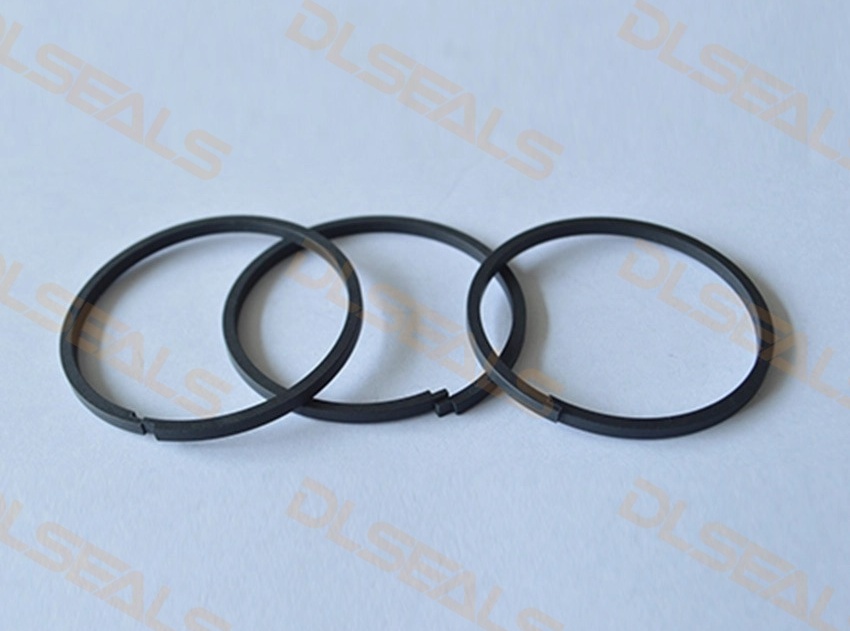
PTFE piston rings are sealing and guiding components manufactured from polytetrafluoroethylene (PTFE) or modified PTFE compounds. They feature a low coefficient of friction, excellent chemical resistance, good compatibility with refrigerants, and a wide operating temperature range. In refrigeration compressors and related equipment, PTFE piston rings utilize the material's low-friction properties to reduce frictional losses during piston movement while meeting sealing requirements under specific operating conditions.
For applications involving a reciprocating stroke of 2–3 mm, a working pressure of approximately 2 MPa, an operating temperature range of -30°C to +80°C, and exposure to Freon and other refrigerants, PTFE piston rings are a potential sealing solution. The key design considerations include material compatibility with refrigerants, wear control during short-stroke reciprocating motion, and dimensional stability under sustained pressure.
This application involves short-stroke movement, moderate operating pressure, and refrigerant exposure, placing specific demands on the friction performance and long-term sealing stability of the piston ring.
Motion: Reciprocating movement with a stroke of approximately 2–3 mm.
Working pressure: Approximately 2 MPa, requiring consideration of pressure resistance, deformation, and extrusion resistance.
Operating temperature: -30°C to +80°C, requiring the material to maintain stable performance at low temperatures and during temperature variations.
Operating media: Freon and other refrigerants. Compatibility with the specific refrigerant and associated refrigeration oil must be confirmed.
Although the stroke is relatively short, frequent reciprocating cycles can still produce continuous friction between the piston ring and its mating surface, potentially causing localized wear. Pressure fluctuations, frequent start-stop cycles, and changes in lubrication conditions may also affect sealing performance and service life.
1. Low Friction and Reduced Movement Resistance
PTFE has excellent self-lubricating properties and a low coefficient of friction. It helps reduce frictional resistance between the piston ring and the cylinder or mating surface, minimizing frictional heat generation and wear. This is particularly beneficial in short-stroke reciprocating equipment, helping improve operating smoothness and reduce frictional losses.
2. Good Compatibility with Refrigerants
PTFE has high chemical stability and offers good resistance to many commonly used refrigerants. It is generally resistant to significant swelling or chemical degradation caused by contact with these media. However, different refrigerants and their associated refrigeration oils have different chemical characteristics. Material compatibility should therefore be verified according to the specific refrigerant type and operating conditions.
3. Wide Temperature Capability
PTFE offers a wide operating temperature range and generally maintains good material stability under conditions between -30°C and +80°C. Compared with some conventional rubber materials, it provides advantages in temperature resistance and chemical stability. Nevertheless, dimensional changes, operating clearances, and the actual sealing structure must still be considered at low temperatures.
4. Improved Wear and Deformation Resistance Through Modification
Although virgin PTFE offers excellent low-friction performance, it is susceptible to creep and cold flow under sustained pressure. Long-term operation may cause dimensional changes and affect the sealing contact condition.
Adding carbon fiber, glass fiber, bronze powder, or other suitable fillers can improve the mechanical strength, wear resistance, and deformation resistance of PTFE. For operating pressures of approximately 2 MPa, virgin PTFE or filled modified PTFE should be selected according to the equipment structure and actual wear requirements.
For applications with a stroke of 2–3 mm, PTFE piston ring design requires attention not only to material properties but also to groove dimensions, operating clearance, and movement frequency.
1. Proper Control of Operating Clearance
The clearance between the piston ring and cylinder directly affects sealing performance. Excessive clearance may increase the risk of PTFE extrusion under pressure, while insufficient clearance can increase frictional resistance and may even restrict movement.
The appropriate clearance should therefore be determined by considering working pressure, temperature variations, material thermal expansion, and manufacturing tolerances.
2. Control of Localized Wear During Short-Stroke Motion
Short-stroke reciprocating motion concentrates repeated contact within a relatively limited area. If the operating frequency is high, the piston ring may experience repeated friction in the same contact region. Material wear resistance, mating surface roughness, and actual lubrication conditions should therefore be carefully evaluated.
3. Reducing the Effects of Creep and Cold Flow Under Sustained Pressure
PTFE may undergo creep and cold flow under long-term compression or sustained pressure, affecting the dimensional stability of the piston ring. For operating pressures of approximately 2 MPa, extrusion resistance should be evaluated based on the ring cross-section, installation structure, and actual operating clearance. Filled modified PTFE may be considered where improved long-term pressure resistance is required.
For the operating conditions described above, the following factors should be evaluated during material and structural selection:
| Selection factor | Key considerations |
|---|---|
| Material type | Virgin PTFE or filled modified PTFE, depending on wear and deformation requirements |
| Media compatibility | Specific Freon type, refrigerant, and associated refrigeration oil |
| Working pressure | Approximately 2 MPa; evaluate creep, cold flow, and extrusion resistance |
| Operating temperature | -30°C to +80°C; consider dimensional changes and operating clearance |
| Motion | 2–3 mm short-stroke reciprocating movement; evaluate frequency and localized wear |
| Structural dimensions | Ring cross-section, groove dimensions, operating clearance, and supporting structure |
If low friction and smooth movement are the primary requirements, low-friction modified PTFE may be considered. If long-term pressure resistance, wear resistance, and dimensional stability are more important, reinforced PTFE compounds should be evaluated.
It is also important to confirm whether the piston ring primarily performs a sealing function or also serves as a guiding and supporting component. Different functional requirements directly influence the ring cross-section, fitting arrangement, and material formulation.
In refrigeration compressors and related equipment, PTFE piston rings utilize the advantages of low friction, chemical resistance, and a wide operating temperature range to meet sealing requirements under specific pressure, temperature, and short-stroke reciprocating conditions.
For this application, the main objective is not simply to maximize pressure or temperature resistance, but to achieve a balance between refrigerant compatibility, friction performance, creep resistance, and dimensional stability. Particular attention should be paid to the specific refrigerant type, refrigeration oil, operating frequency, and piston ring clearance, as these factors directly affect sealing performance and actual service life.
[DLSEALS kindly Reminder] Sealing issues? Turn to DLSEALS! As a sealing component manufacturer, we specialize in customizing sealing components, providing a full range of services from design, research and development, production, testing, and more. If you have more information you'd like to know, feel free to contact us directly. DLSEALS's product experts are dedicated to serving you!

GUANGDONG DLSEALS TECHNOLOGY CO.,LTD.
TEL/Whatsapp
:+86 15918359971ADDRESS
:No. 2 Niujiaokeng Road, Baizhoubian, Dongcheng District, Dongguan, Guangdong, China.