News
A2026-11-19
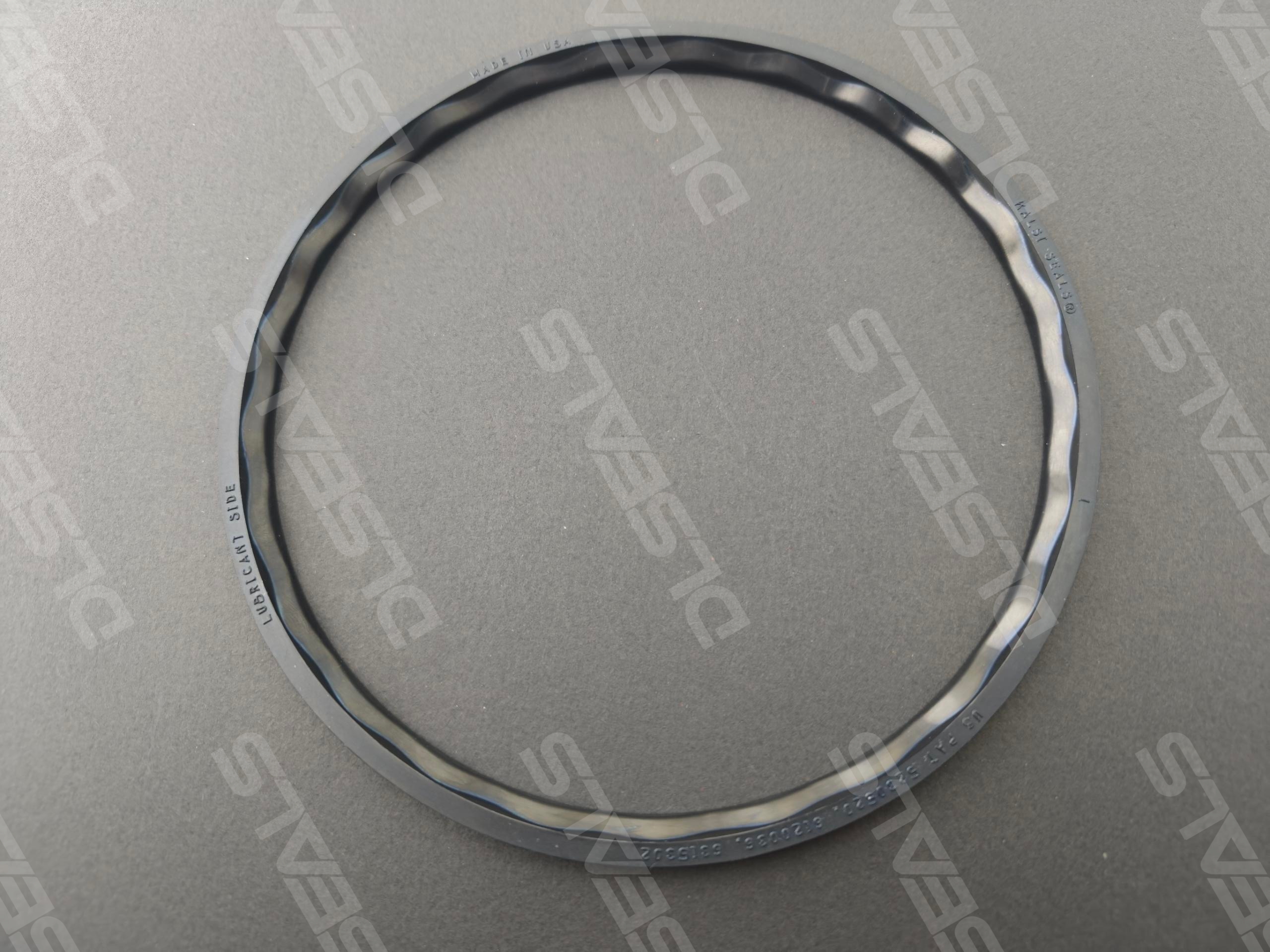
In industrial rotating equipment, shaft seals must not only prevent lubricant leakage but also protect internal components from external dust, mud, and abrasive particles. As operating pressures, rotational speeds, and working conditions become increasingly demanding, conventional rotary sealing designs face greater challenges in terms of friction, wear, and service life.
A Hydrodynamic Rotary Shaft Seal is a specialized rotary sealing solution that uses the principle of fluid dynamic lubrication. Its specially designed sealing lip generates a thin lubricating film between the seal and the rotating shaft during operation. This reduces direct friction while providing pressure sealing and protection against external contaminants, making it suitable for high-pressure, high-speed, and demanding industrial environments.
This type of seal typically features a one-piece construction installed in a groove in the equipment housing. Radial compression brings the seal into initial contact with the rotating shaft. Although its installation may resemble that of certain O-ring groove arrangements, its sealing lip incorporates a specialized hydrodynamic design.
The key structural features include two main elements:
1. Wavy Hydrodynamic Lubrication Lip
On the lubricant side, the sealing lip features a specially designed wavy edge. When the shaft rotates, this geometry generates a hydrodynamic effect that draws a small amount of lubricant into the contact area between the seal and the shaft, forming a thin lubricating film.
This design reduces direct contact between the sealing lip and the shaft surface, helping to minimize friction and wear during operation.
2. Contaminant-Exclusion Lip Edge
On the environmental side, the sealing lip features a relatively steep circumferential edge designed to prevent mud, dust, moisture, and other external contaminants from entering the sealing area.
By using different lip geometries on the lubricant and environmental sides, the seal can perform two functions simultaneously: retaining lubricant and excluding external contaminants.
Conventional rotary seals generally rely on contact pressure between the sealing lip and the shaft surface to achieve sealing. Although this design is relatively simple, continuous sliding friction under high-speed or high-pressure conditions can cause temperature increases, accelerated wear, and even premature seal failure.
Hydrodynamic rotary seals address these challenges through their specially engineered lip geometry.
During shaft rotation:
When the shaft begins to rotate, the wavy lip geometry draws lubricant into the sealing contact area. As rotation continues, the fluid forms a hydrodynamic lubricating film within the sealing interface, providing a degree of fluid lubrication between the lip and the shaft.
This lubrication reduces frictional torque and heat generation while slowing wear on both the sealing lip and the shaft surface. Compared with conventional designs that rely primarily on dry friction or boundary lubrication, this structure can improve operating capability under combinations of relatively high pressure and rotational speed.
When the shaft stops:
Once the shaft stops rotating, the hydrodynamic effect disappears, and the lubricating film is no longer continuously generated by rotational motion. The sealing lip then relies on its elastic deformation and installation preload to re-establish static contact sealing.
Therefore, this design must provide not only effective lubrication during rotation but also reliable static sealing when the equipment is stationary.
1. Reduced Friction and Operating Temperature
The hydrodynamic lubricating film reduces direct friction between the sealing lip and the shaft, helping to lower operating torque and frictional heat. This is particularly beneficial for rotating equipment operating continuously over extended periods.
2. Reduced Wear on the Seal and Shaft
Conventional contact-type rotary seals may experience progressive lip wear and shaft surface damage during long-term operation. By improving lubrication at the sealing interface, hydrodynamic designs can reduce frictional losses and help extend the service life of both the seal and the mating shaft surface.
3. Improved Capability Under Combined High-Pressure and High-Speed Conditions
When pressure and rotational speed increase simultaneously, conventional rotary seals often face more severe frictional heating, lip deformation, and wear. Hydrodynamic lip design improves lubrication conditions at the sealing interface, potentially allowing operation under more demanding combinations of pressure and speed.
However, the actual permissible pressure and speed depend on seal dimensions, materials, shaft surface condition, lubricant properties, and the specific design. The rated operating range cannot be determined solely from the presence of a hydrodynamic structure.
4. Protection Against Abrasive Particles and Contaminants
The specially designed environmental-side lip helps prevent external mud, dust, and abrasive particles from entering the equipment. This feature is particularly valuable in drilling, mining, slurry handling, and subsea applications where contamination is a major concern.
5. Adaptability to Demanding Dynamic Conditions
Rotating equipment may experience frequent starts and stops, pressure fluctuations, shock loads, and vibration. Compared with certain mechanical seal designs that are more sensitive to face conditions and operating stability, one-piece hydrodynamic rotary seals may offer advantages under some transient operating conditions. Actual suitability must still be verified for the specific equipment.
Hydrodynamic rotary shaft seals are primarily used in industrial equipment where lubricant retention, contaminant exclusion, and rotating shaft sealing are all required.
Oilfield drilling equipment: Applications include downhole mud motors, rotary steerable tools, drilling swivels, and coring swivels. These systems often operate under high pressure and may be exposed to solid particles in the working fluid, placing high demands on wear resistance and contaminant exclusion.
Rotary swivels and high-pressure rotary assemblies: Used in certain hydraulic swivels, side-port swivels, and high-pressure fluid transfer assemblies where sealing is required during rotation.
Slurry pumps and mining equipment: Applicable to rotating shaft sealing positions in submersible dredging pumps, reverse circulation drilling machines, mining drilling equipment, and industrial slurry mixers where abrasive media must be isolated.
Subsea and marine equipment: Used in selected underwater vehicles, submersible equipment, and subsea rotating machinery to retain internal lubricants and help prevent water and contaminants from entering.
Industrial rotating machinery: May be used in machine tools, industrial mixing equipment, and other specialized rotating assemblies, subject to pressure, speed, media, and structural requirements.
The main differences between hydrodynamic rotary seals, conventional radial shaft seals, and mechanical seals lie in their sealing interfaces and operating principles.
| Comparison | Hydrodynamic Rotary Seal | Conventional Radial Shaft Seal | Mechanical Seal |
|---|---|---|---|
| Sealing principle | Specially designed lip with hydrodynamic lubrication | Elastic lip in contact with the shaft | Contact between rotating and stationary seal faces |
| Lubrication | Lubricating film generated by hydrodynamic action | Usually relies on the sealed medium or external lubrication | Fluid film between sealing faces |
| Operating friction | Reduced through hydrodynamic lubrication | Relatively noticeable contact friction | Depends on face design and operating conditions |
| Contaminant exclusion | Achieved through a dedicated lip design | Depends on lip configuration and dust-exclusion features | Usually requires additional protection |
| Construction | Typically one-piece | Usually an elastomeric element with a reinforcing case | Generally consists of multiple components |
| Typical applications | Specialized high-pressure rotary and contaminated environments | General rotary shaft sealing | Face sealing in pumps, compressors, and similar equipment |
Each sealing design has its own application range. Conventional radial shaft seals offer cost and structural advantages in ordinary lubricated, low-to-medium-pressure rotary applications. Mechanical seals are widely used in pumps where leakage control is important. Hydrodynamic rotary seals are particularly worth considering for specialized applications requiring a combination of relatively high pressure, rotational speed, reduced friction, and contaminant exclusion.
Hydrodynamic rotary shaft seals have specific structural and operating requirements. Selection should not be based solely on shaft diameter and installation dimensions.
First, the operating pressure, rotational speed, and pressure fluctuation range must be defined. The combination of pressure and speed directly affects lip loading, lubricating film formation, and operating temperature.
Second, the type, viscosity, and temperature of the lubricant must be confirmed. Hydrodynamic lubrication depends on the formation of an effective lubricating film within the sealing interface, so fluid properties have a direct influence on lubrication and sealing performance.
The shaft surface condition is also important. Surface roughness, hardness, roundness, concentricity, and radial runout can all affect sealing performance. An unsuitable shaft finish or excessive shaft movement may cause uneven contact pressure, unstable lubrication, and accelerated lip wear.
For applications involving mud, sand, or other solid particles, particle size, concentration, and hardness should also be evaluated, together with the contaminant-exclusion capability of the sealing structure.
Finally, start-stop frequency, shock loads, vibration, temperature fluctuations, and available installation space should be considered. For critical equipment operating under high pressure, high speed, or complex media conditions, performance should be verified through testing under representative operating conditions rather than determined solely from theoretical parameters.
Hydrodynamic rotary shaft seals combine specialized lip geometry with fluid lubrication principles to provide an effective rotary sealing solution. The wavy hydrodynamic edge on the lubricant side generates a lubricating film during shaft rotation, helping to reduce friction, heat, and wear at the sealing interface. The specially designed environmental-side lip helps prevent external contaminants from entering the equipment.
Compared with conventional radial shaft seals, hydrodynamic rotary seals place greater emphasis on lubrication and wear resistance under demanding rotary conditions. Compared with mechanical seals, their one-piece construction can offer a more compact design and convenient installation.
For demanding applications such as oilfield drilling, mining machinery, slurry pumps, subsea equipment, and high-pressure rotary assemblies, hydrodynamic rotary shaft seals are a technical solution worth considering. Actual selection should take into account pressure, rotational speed, media, temperature, shaft surface condition, and equipment configuration.
[DLSEALS kindly Reminder] Sealing issues? Turn to DLSEALS! As a sealing component manufacturer, we specialize in customizing sealing components, providing a full range of services from design, research and development, production, testing, and more. If you have more information you'd like to know, feel free to contact us directly. DLSEALS's product experts are dedicated to serving you!

GUANGDONG DLSEALS TECHNOLOGY CO.,LTD.
TEL/Whatsapp
:+86 15918359971ADDRESS
:No. 2 Niujiaokeng Road, Baizhoubian, Dongcheng District, Dongguan, Guangdong, China.