News
A2026-07-09
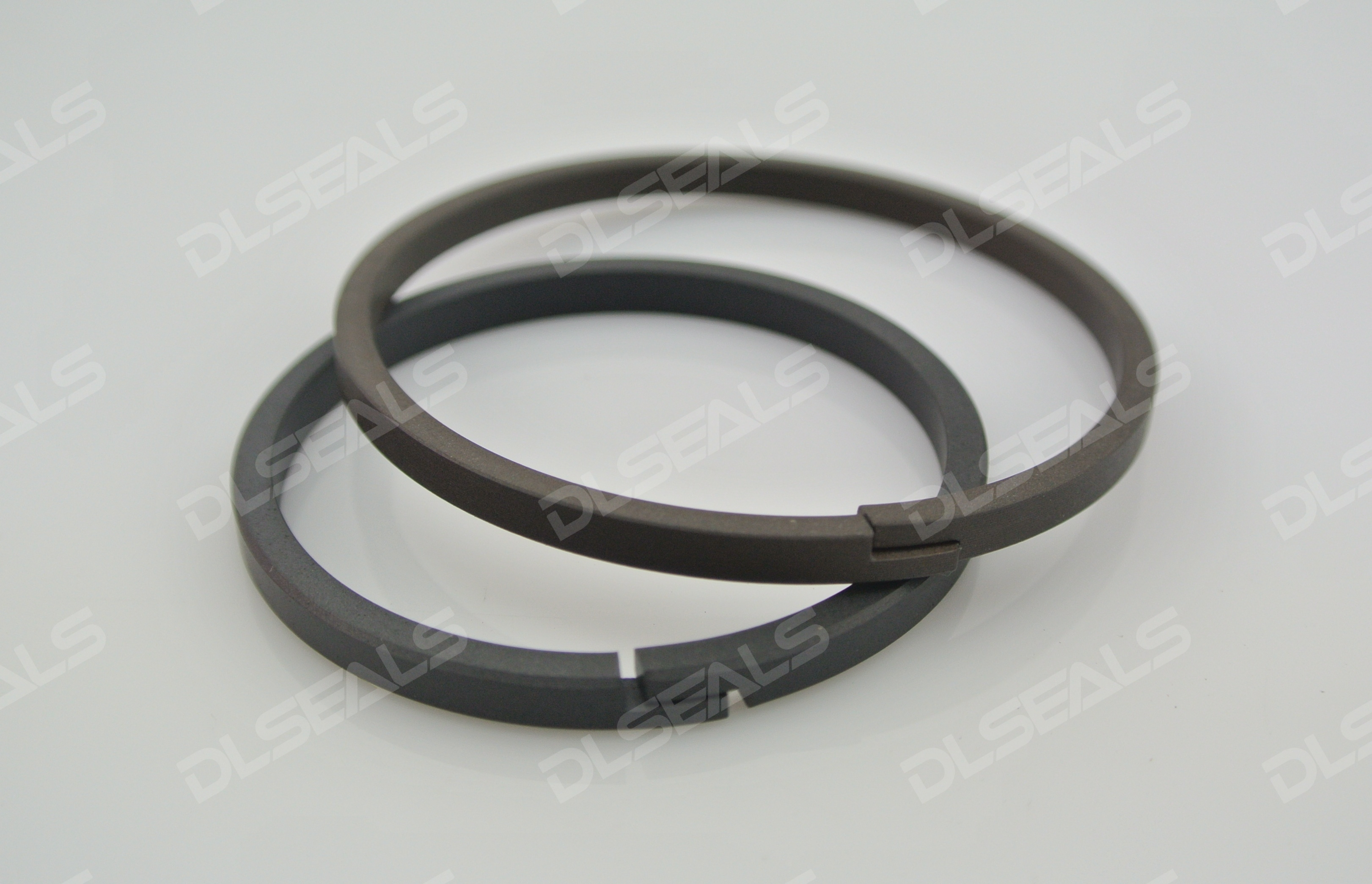
As automotive, commercial vehicle, marine, construction machinery, and industrial power systems continue to pursue higher efficiency and greater power output, turbocharging has become an essential technology for modern engines. Among all turbocharger components, the turbocharger seal ring plays a critical role in preventing oil leakage, maintaining boost pressure, and ensuring the long-term reliability of the turbocharger.
A turbocharger seal ring, often referred to as a turbo piston ring, is installed in grooves on the turbine shaft or compressor shaft. Unlike conventional rubber oil seals, it provides dynamic sealing through precise clearances, oil pressure, and its own spring force rather than direct contact.
Since turbochargers typically operate at speeds ranging from 100,000 to 300,000 RPM, while turbine-side temperatures may exceed 900°C, seal rings must offer outstanding resistance to high temperatures, wear, and fatigue.
Engine oil continuously lubricates and cools the turbocharger bearings during operation. The seal ring works together with the shaft and housing to create a very small sealing clearance. Combined with pressure differentials and centrifugal force, this design effectively:
Because it is a non-contact or low-contact dynamic sealing system, friction and wear are minimized even under extremely high rotational speeds.
Material selection depends on operating temperature, rotational speed, and application requirements.
High Carbon Spring Steel
The most commonly used material due to its excellent elasticity, fatigue resistance, and cost-effectiveness.
Stainless Steel
Provides excellent corrosion resistance, oxidation resistance, and dimensional stability under elevated temperatures.
High-Temperature Alloys
Premium turbochargers for heavy-duty diesel engines, racing vehicles, marine engines, and aerospace applications often use high-performance alloys such as:
To further improve durability, many seal rings also receive advanced surface treatments, including phosphating, nitriding, DLC (Diamond-Like Carbon) coatings, PVD coatings, and hard chrome plating.
A high-quality turbocharger seal ring should provide:
Seal ring failures are generally caused by multiple factors, including:
Typical symptoms include oil leakage, blue exhaust smoke, increased oil consumption, reduced boost pressure, and shortened turbocharger bearing life.
Turbocharger seal rings are widely used in:
Different applications require customized materials, dimensional tolerances, and sealing designs to meet specific operating conditions.
When selecting a turbocharger seal ring, engineers should evaluate operating temperature, shaft speed, lubrication conditions, media compatibility, dimensional tolerances, and expected service life. For severe operating environments, high-temperature alloys combined with advanced surface coatings provide superior durability and long-term sealing performance.
Although small in size, the turbocharger seal ring is one of the most important sealing components inside a turbocharger. Its performance directly affects lubrication efficiency, boost pressure, engine reliability, and turbocharger service life. As modern engines continue to operate at higher temperatures and higher rotational speeds, demand for precision-engineered, high-performance turbocharger seal rings will continue to grow. Selecting premium-quality seal rings helps reduce oil leakage, improve operational efficiency, and extend the overall lifespan of turbocharging systems.
[DLSEALS kindly Reminder] Sealing issues? Turn to DLSEALS! As a sealing component manufacturer, we specialize in customizing sealing components, providing a full range of services from design, research and development, production, testing, and more. If you have more information you'd like to know, feel free to contact us directly. DLSEALS's product experts are dedicated to serving you!

GUANGDONG DLSEALS TECHNOLOGY CO.,LTD.
TEL/Whatsapp
:+86 15918359971ADDRESS
:No. 2 Niujiaokeng Road, Baizhoubian, Dongcheng District, Dongguan, Guangdong, China.