News
A2026-03-18
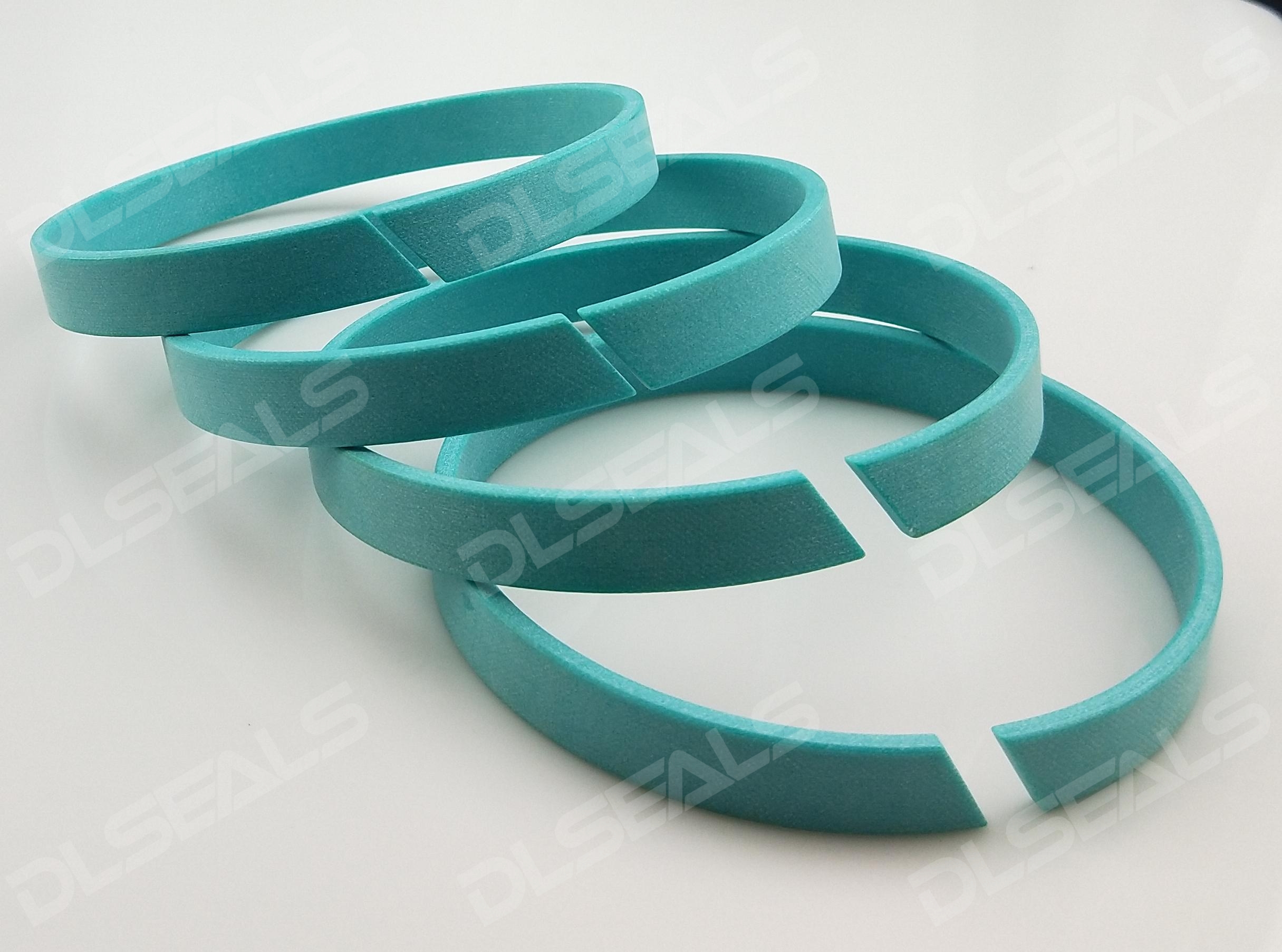
Guide rings (also known as guide rings, support rings, wear rings, wear bands, Slydring®, or guide rings) are seemingly insignificant yet critically important precision components in hydraulic cylinders, pneumatic cylinders, and other linear reciprocating mechanisms. Although they do not perform a sealing function, they act as "invisible guardians," quietly ensuring precise motion of the entire system, extending service life, and preventing premature failure. In modern construction machinery, injection molding machines, lifting platforms, automotive power steering systems, and similar equipment, virtually every hydraulic cylinder relies on them.
Guide rings are typically divided into piston guide rings (outer) and piston rod guide rings (inner).
They rely on low friction coefficient (usually 0.05–0.15) and appropriate interference fit to achieve "sliding support." When radial force is applied, the guide ring undergoes slight elastic deformation, distributing the load evenly over a large area of the cylinder bore and avoiding localized stress concentration. Their materials also provide excellent embeddability and wear resistance, allowing reliable performance even under dry friction or short-term oil-starved conditions.
In these applications, cylinders without guide rings often suffer bore scoring within a few hundred hours, while those with high-quality guide rings can easily operate 5,000–10,000+ hours.
| Material Type | Main Characteristics | Load Capacity | Friction Coefficient | Typical Applications | Common Brands/Grades |
|---|---|---|---|---|---|
| PTFE + Bronze / Glass Fiber | Excellent self-lubrication, wide temp range (-60~+260°C) | Medium | Very low | High-speed, high-frequency, precision cylinders | Turcite, Glyd Ring |
| POM (Polyoxymethylene) | High strength, dimensional stability, cost-effective | High | Low | General industrial cylinders, medium speed | Delrin, Hostaform |
| Phenolic Resin + Fabric | Highest load capacity, good impact resistance | Very high | Medium | Heavy-duty, low-speed, harsh conditions | Fabric Phenolic |
| Polymer Composites | Excellent vibration absorption, debris embeddability | High | Low | Mining, metallurgy, dusty environments | Orkot, HiMod |
Summary Though small, guide rings undertake four major missions: guidance, load-bearing, anti-wear, and seal protection. They are not optional accessories but core wear-resistant components that determine hydraulic cylinder longevity and reliability. Many sudden "oil leaks, vibration, cylinder scoring" issues stem from ignored guide ring failure. Choosing the right material, proper installation, and regular checks can make a hydraulic system run for years longer with minimal maintenance.
In mechanical design and repair, never underestimate these small "plastic rings"—they are the unsung heroes that allow steel to coexist peacefully with steel.
[DLSEALS kindly Reminder] Sealing issues? Turn to DLSEALS! As a sealing component manufacturer, we specialize in customizing sealing components, providing a full range of services from design, research and development, production, testing, and more. If you have more information you'd like to know, feel free to contact us directly. DLSEALS's product experts are dedicated to serving you!

GUANGDONG DLSEALS TECHNOLOGY CO.,LTD.
TEL/Whatsapp
:+86 15918359971ADDRESS
:No. 2 Niujiaokeng Road, Baizhoubian, Dongcheng District, Dongguan, Guangdong, China.