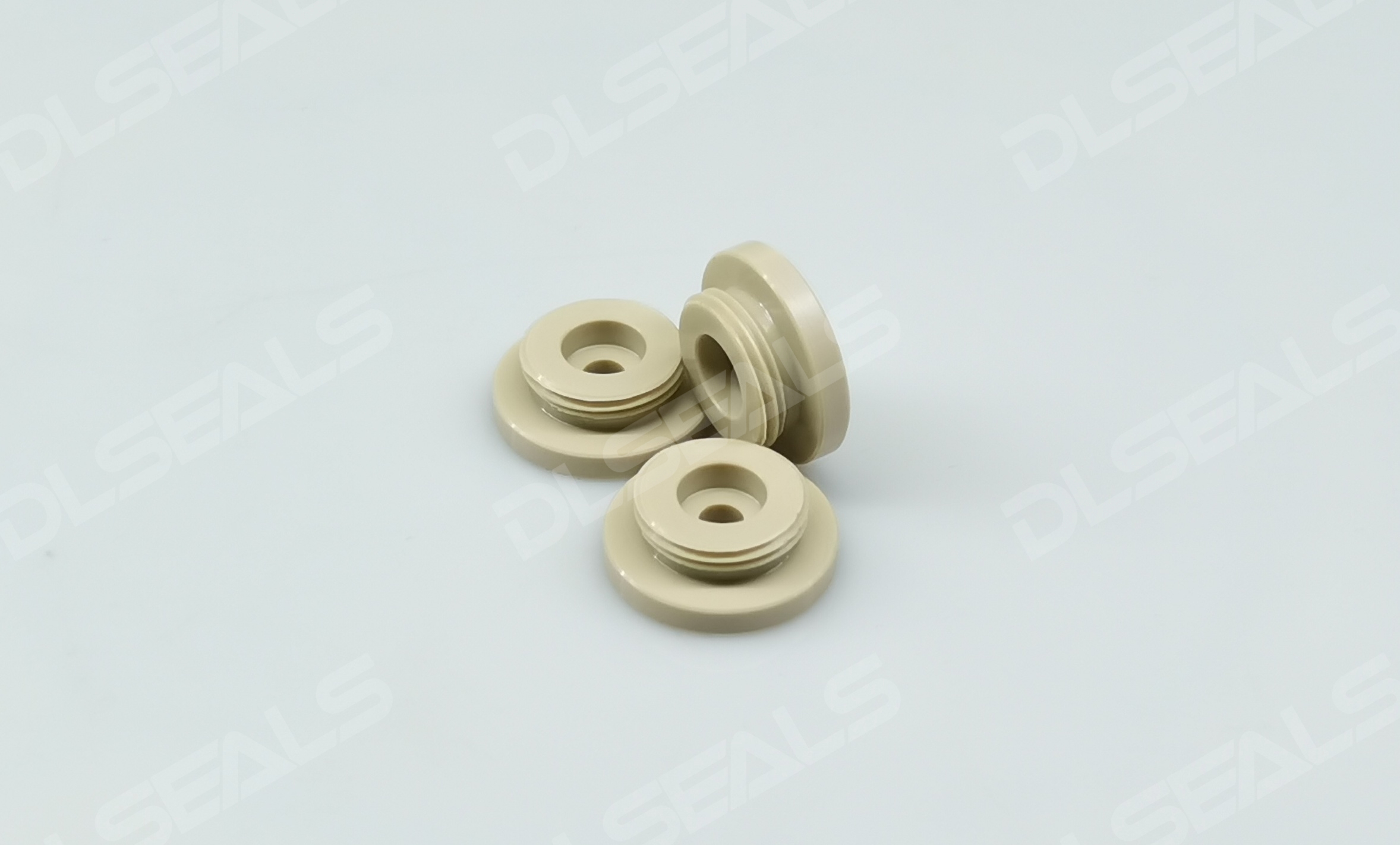
Polyether ether ketone (PEEK) is a semi-crystalline high-performance thermoplastic engineering plastic that occupies an important position in the field of custom seals due to its outstanding comprehensive properties. PEEK seals are custom-manufactured through injection molding, CNC precision machining, or compression molding processes to meet the stringent requirements of industries such as aerospace, oil and gas, automotive, semiconductor, and medical devices. Compared with traditional rubber, PTFE, or metal seals, PEEK custom seals demonstrate unparalleled advantages in high-temperature (continuous service temperature up to 260°C), high-pressure, highly corrosive media, and high-wear conditions. This article focuses on PEEK custom seals, providing a professional and detailed technical analysis covering material characteristics, structural design, manufacturing processes, performance advantages, application cases, and development trends.
1. Core Properties of PEEK Materials
The PEEK molecular chain consists of alternating benzene rings, ether bonds, and ketone bonds, giving it a unique position at the top of the “performance pyramid”:
- High-Temperature Resistance: Glass transition temperature approximately 143°C, melting point 343°C, continuous service temperature 250–260°C, short-term resistance above 300°C, and heat deflection temperature (HDT) up to 315°C (glass fiber reinforced grade).
- Mechanical Strength: Tensile strength 90–100 MPa (unfilled), increasing to 130–140 MPa with 30% glass fiber reinforcement and 150–170 MPa with carbon fiber reinforcement; flexural modulus approximately 4 GPa, up to 11–12 GPa in reinforced grades.
- Chemical Resistance: Excellent resistance to most organic solvents, acids, alkalis, fuels, hydraulic oils, and high-temperature steam; limited corrosion only in a few strong oxidizing media such as concentrated sulfuric acid.
- Wear Resistance and Self-Lubrication: Low friction coefficient (dynamic 0.2–0.4), especially in bearing-grade PEEK (filled with PTFE, graphite, and carbon fiber), which can reduce the friction coefficient to 0.1–0.15 with significantly lower wear rates.
- Dimensional Stability and Creep Resistance: Low moisture absorption (<0.5%), extremely low creep under high temperature and pressure, and excellent dimensional stability.
- Other Properties: UL94 V-0 flame rating, biocompatibility (USP Class VI), radiation resistance, low smoke and low toxicity, and density of only 1.3 g/cm³ (much lower than metals).
These characteristics make PEEK an ideal replacement for metals, PTFE, and fluororubber in extreme operating conditions.
(The above image shows the high-performance plastics performance pyramid, with PEEK at the top.)
2. Structural Design of PEEK Custom Seals
PEEK seals can be customized into various forms according to operating conditions:
- Static Seals: Gaskets, O-ring backup rings, valve seats, and flange seals.
- Dynamic Seals: Piston rings, rotary shaft seals, reciprocating seals, and bearing retainers.
- Reinforced Types: Glass fiber (GF30) for increased rigidity, carbon fiber (CF30) for enhanced strength and thermal conductivity, and bearing grade (filled with PTFE + graphite) for optimized low-friction wear resistance.
Key design considerations include:
- Compression ratio controlled between 10%–35% to ensure initial contact stress and rebound performance.
- Groove design optimized using finite element analysis (FEA) to improve contact width and stress distribution.
- Surface roughness Ra ≤0.2 μm to minimize leakage paths.
The advantage of customization lies in rapid response for small-batch, multi-variety production and complex geometries (such as lips, spiral grooves, or integrated spring grooves).
(The above images display real PEEK custom seals and precision engineered components.)
3. Manufacturing Processes
PEEK processing is relatively challenging, but modern technologies have enabled efficient customization:
- Injection Molding: Suitable for mass production of complex-shaped seals. Process temperatures 380–420°C, mold temperature 180–220°C, requiring specialized high-temperature molds and thorough drying (moisture <0.02%). Advantages include high dimensional consistency and production efficiency.
- CNC Precision Machining: Turning, milling, drilling, and grinding from PEEK rod or plate stock. Ideal for high-precision, small-batch, or prototype parts, with tolerances as tight as ±0.01 mm. Sharp tools, low cutting speeds with high feed rates, and cooling with coolant or compressed air are required to prevent overheating and material softening.
- Compression Molding / Extrusion: Used for large or irregularly shaped parts.
- Post-Processing: Annealing to relieve internal stress, surface polishing, and optional coatings (PTFE or ceramic for enhanced wear resistance).
Filled modifications (such as 30% carbon fiber) require adjusted process parameters to avoid fiber breakage or anisotropy. High-end manufacturers use cleanroom production to ensure contamination-free parts.
(The above images show PEEK CNC machining and injection molding scenes.)
4. Performance Advantages and Comparisons
The core competitiveness of PEEK custom seals is reflected in:
- High-Temperature and High-Pressure Sealing: Maintains high strength and low creep at 260°C, far superior to PTFE (prone to cold flow) and most fluororubbers (which soften).
- Media Resistance: Stable against more than 140 chemical media, suitable for acidic gases and high-pressure crude oil in oil and gas extraction.
- Low Friction and Wear Resistance: Long service life under dry friction or starved lubrication conditions, reducing system energy consumption.
- Lightweight: Low density allows significant weight reduction when replacing metals (critical in aerospace).
- Long Service Life: Fatigue-resistant and aging-resistant, enabling repeated use or extended service.
Compared with traditional materials, PEEK can reduce leakage rates by several orders of magnitude in extreme conditions, significantly lowering maintenance costs.
(The above image shows PEEK seals in various precision applications.)
5. Typical Application Fields
- Aerospace: Engine seals, fuel system gaskets, and satellite vacuum seals. Benefits include high-temperature resistance, lightweight design, and radiation resistance.
- Oil and Gas: Downhole tool seals, valve seats, pipeline flanges, and face seals. Capable of withstanding high-pressure corrosive media.
- Automotive (especially New Energy Vehicles): Motor seals, thermal management system gaskets, battery seals, and transmission sealing rings. Resistant to high-temperature oils and vibration.
- Semiconductor and Electronics: Vacuum chamber seals, CMP retaining rings, and wafer chucks. Low contamination and high purity.
- Medical Devices: Surgical instrument seals and sterilization equipment components. Biocompatible and repeatedly sterilizable.
- Industrial Equipment: Pump valves, compressors, and wind power bearing-related seals. Excellent wear resistance and self-lubrication.
6. Technology Development Trends
- Modified Composites: Nano-fillers, conductive/thermally conductive PEEK, and higher wear-resistant grades.
- Digital Manufacturing: 3D printing of PEEK (FDM or SLS) for ultra-complex geometric customization, shortening development cycles.
- Intelligent Seals: Integrated sensors for monitoring contact pressure and wear status.
- Green and Sustainable: Recycling and bio-based modifications to support carbon neutrality goals.
With the advancement of high-end manufacturing and new energy technologies, the market demand for PEEK custom seals continues to grow and is expected to further expand its share in lightweight and extreme-environment applications.
Conclusion
PEEK custom seals have become an indispensable high-end sealing solution in modern engineering due to their excellent high-temperature resistance, corrosion resistance, high strength, low friction, and dimensional stability. Their flexible customization manufacturing processes and superior performance over traditional materials provide reliable protection for critical fields such as aerospace, oil and gas extraction, and new energy vehicles. For engineers, selecting the appropriate filler grade, optimizing design, and adopting professional processing techniques are key to fully realizing the potential of PEEK. It is recommended to collaborate with manufacturers possessing full-process capabilities, perform material selection, FEA simulation verification, and bench testing according to specific operating conditions to achieve optimal sealing performance and economy.
[DLSEALS kindly Reminder] Sealing issues? Turn to DLSEALS! As a sealing component manufacturer, we specialize in customizing sealing components, providing a full range of services from design, research and development, production, testing, and more. If you have more information you'd like to know, feel free to contact us directly. DLSEALS's product experts are dedicated to serving you!