News
A2026-08-14
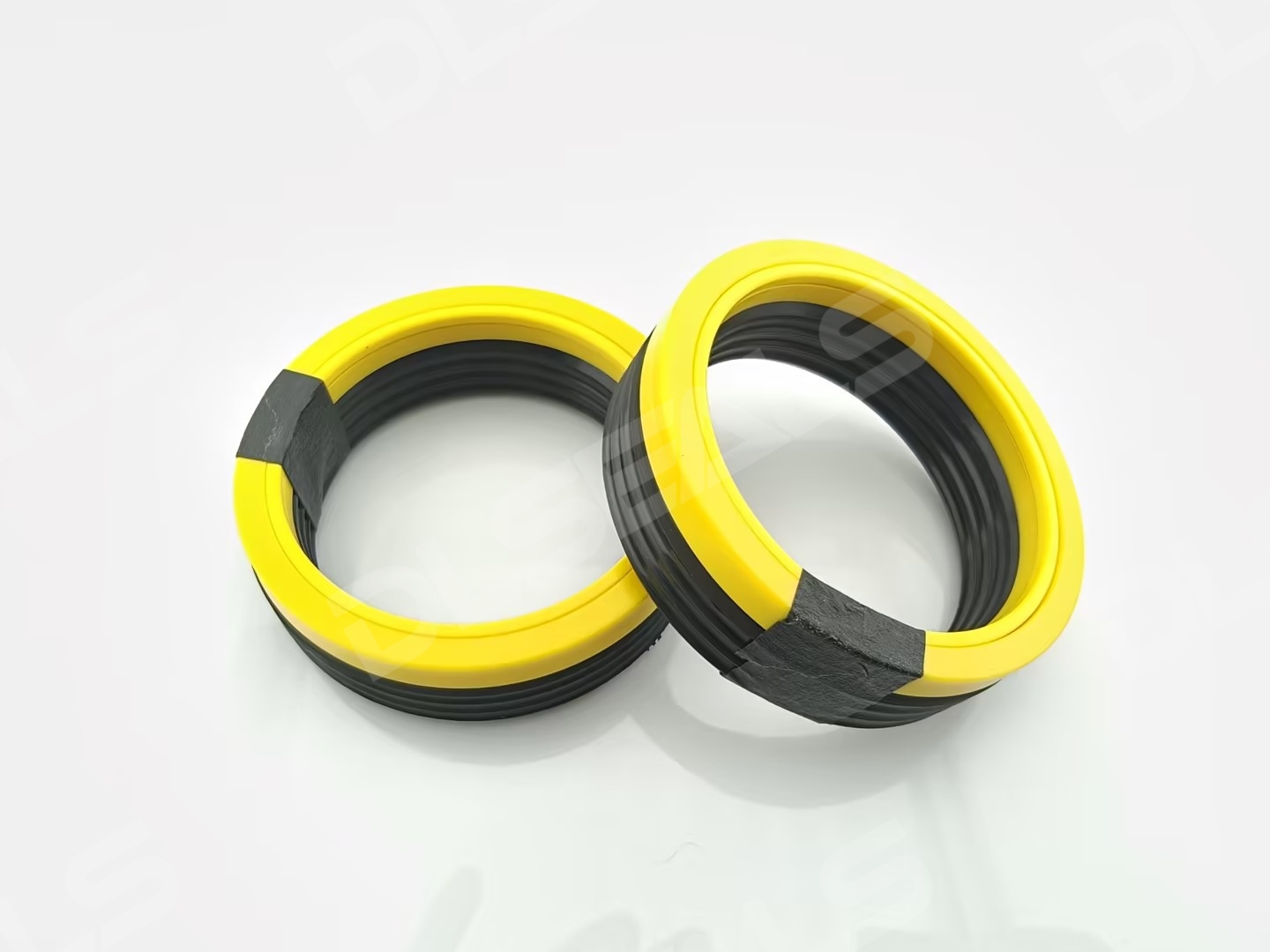
A multi-element combined oil seal is a rotary shaft sealing system consisting of multiple sealing elements, pressure rings, elastic components, and metal support structures. Unlike conventional one-piece rotary shaft seals, it does not rely on a single sealing lip to perform all sealing functions. Instead, multiple sealing elements create a series of sealing barriers, while pressure rings maintain the position and preload of each sealing element.
This type of sealing system is particularly suitable for large shaft diameters, low-speed and heavy-duty applications, severe dust or water contamination, and equipment requiring high leakage control. Typical applications include large gearboxes, construction machinery, mining equipment, marine transmission systems, and heavy industrial machinery.
A typical multi-element combined oil seal consists of multiple sealing rings, pressure rings, springs or elastic elements, metal support components, and a housing or mounting seat. Depending on the operating conditions and sealing requirements, two, three, or more sealing elements can be incorporated into the assembly.
The sealing rings are the primary functional components. They can be manufactured from NBR, FKM, PTFE, polyurethane, or other wear-resistant sealing materials. The pressure ring compresses and positions the sealing elements, helping maintain stable preload during long-term operation.
Unlike conventional oil seals, which generally rely on a spring to generate radial pressure on a single sealing lip, the combined design allows the pressure ring to control the assembly and preload of multiple sealing elements. This provides greater flexibility in sealing design, allowing individual sealing elements to perform different functions such as primary oil sealing, dust exclusion, and auxiliary sealing.
A multi-element combined oil seal generally works through a multi-stage barrier sealing principle.
The sealing element closest to the equipment interior primarily prevents lubricating oil or grease from escaping. Intermediate sealing elements provide additional barriers against leakage, while the outer sealing element mainly protects the system against dust, water, mud, and other external contaminants.
The pressure ring plays an important role in maintaining sealing performance. During installation, it applies an axial compressive force to the sealing elements, causing controlled elastic deformation and generating stable contact pressure against the rotating shaft.
As the sealing elements undergo gradual wear, a properly designed pressure system can continue to maintain effective contact, helping extend the service life of the sealing assembly.
In heavily contaminated environments, the spaces between multiple sealing elements can also act as protective zones. This prevents mud, water, and abrasive particles from reaching the primary sealing area directly. As a result, the system provides both internal fluid retention and external contamination protection.
Conventional oil seals offer simple construction, easy installation, and relatively low cost, making them suitable for many standard rotary shaft applications. However, when shaft diameters become large or operating environments become particularly harsh, a single-piece oil seal may have limitations.
A multi-element combined oil seal provides a higher degree of functional separation by using multiple sealing elements and a pressure-ring structure.
| Feature | Conventional Oil Seal | Multi-Element Combined Oil Seal |
|---|---|---|
| Sealing structure | Single integrated component | Multiple sealing elements |
| Number of sealing elements | Usually limited | Configurable according to application |
| Preloading method | Radial spring preload | Pressure ring / structural preload |
| Dust protection | Moderate | Enhanced |
| Large shaft diameter | More limited | More adaptable |
| Maintenance | Usually replaced as one unit | Certain designs allow individual components to be serviced or replaced |
| Harsh-environment capability | Moderate | High |
For large industrial equipment, the modular design can also be customized according to shaft diameter, available installation space, and operating requirements rather than being restricted to standard oil seal dimensions.
The sealing material should be selected according to the operating medium, temperature, shaft speed, and contamination level.
NBR provides good oil resistance, wear resistance, and overall mechanical performance. It is suitable for common lubricating oils, gear oils, and general industrial applications.
FKM (fluoroelastomer) provides superior resistance to high temperatures, oils, and many aggressive chemicals, making it suitable for high-temperature and chemically demanding environments.
PTFE offers low friction, excellent temperature resistance, and outstanding chemical stability. It is particularly suitable for high-speed, low-friction, and chemically demanding applications, although its structural design and installation requirements are generally more demanding than those of conventional rubber seals.
For mining machinery, construction equipment, marine transmission systems, and large gearboxes, particular attention should be paid to wear resistance, tear resistance, and resistance to abrasive particles.
Multi-element combined oil seals are commonly used in rotary equipment where reliability and service life are critical, including:
They are particularly effective in low-speed, high-load, large-shaft-diameter applications exposed to dust, mud, water, or continuous operation.
The design of a multi-element combined oil seal is not simply a matter of increasing the number of sealing rings. The system should be designed according to shaft diameter, rotational speed, pressure, operating temperature, medium, shaft surface condition, number of sealing elements, pressure-ring design, and available installation space.
The compression and contact pressure of each sealing element are especially important. Excessively low contact pressure may result in leakage, while excessive pressure can increase friction, heat generation, and wear. The design therefore needs to achieve an appropriate balance between sealing performance and frictional losses.
For large-diameter and low-speed heavy-duty equipment, shaft runout, concentricity, and surface wear must also be carefully controlled. Even when high-performance sealing materials are used, severe scratches, eccentricity, or excessive radial runout can cause abnormal wear and leakage.
A multi-element combined oil seal integrates multiple sealing elements and pressure-ring structures to provide fluid retention, external contamination protection, and controlled sealing preload. Compared with conventional one-piece oil seals, it offers greater structural flexibility and better adaptability to demanding operating environments.
For large gearboxes, mining machinery, construction equipment, marine transmission systems, and heavy industrial machinery, optimizing the number of sealing elements, pressure-ring design, preload, and material selection can improve leakage control, dust and water protection, wear resistance, and overall service life.
[DLSEALS kindly Reminder] Sealing issues? Turn to DLSEALS! As a sealing component manufacturer, we specialize in customizing sealing components, providing a full range of services from design, research and development, production, testing, and more. If you have more information you'd like to know, feel free to contact us directly. DLSEALS's product experts are dedicated to serving you!

GUANGDONG DLSEALS TECHNOLOGY CO.,LTD.
TEL/Whatsapp
:+86 15918359971ADDRESS
:No. 2 Niujiaokeng Road, Baizhoubian, Dongcheng District, Dongguan, Guangdong, China.