News
A2025-12-25
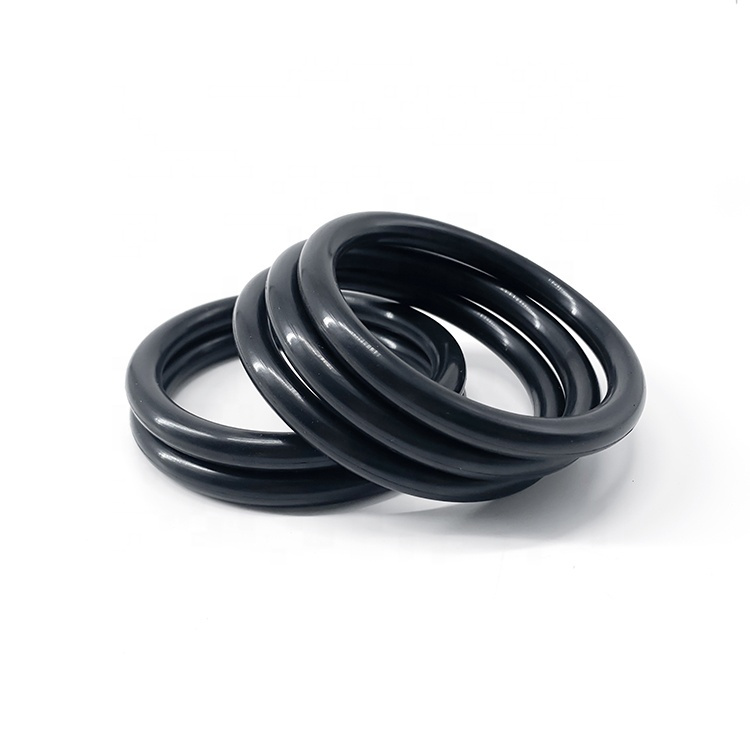
In the fields of industrial manufacturing, construction, and automotive, seals play a crucial role. Among numerous sealing materials, EPDM (Ethylene Propylene Diene Monomer) has become a widely preferred choice due to its exceptional performance. This article provides an in-depth exploration of the manufacturing process, unique characteristics, application advantages, and effective methods for extending the service life of EPDM seals, offering comprehensive technical reference for related industries.
EPDM stands for Ethylene Propylene Diene Monomer, a saturated synthetic rubber material. Its molecular structure consists of ethylene, propylene, and a small amount of diene monomer. This special chemical structure gives it a unique combination of properties. Due to its excellent weather resistance, chemical resistance, and temperature adaptability, EPDM seals are widely used in building doors and windows, automotive manufacturing, HVAC systems, and other fields.
The manufacturing of EPDM seals begins with precise material formulation. Raw EPDM rubber is mixed with various additives (such as reinforcing agents, vulcanizing agents, anti-aging agents, colorants, etc.) according to specific formulas. This process takes place in an internal mixer to ensure uniform dispersion of components, resulting in homogeneous mixed rubber.
The mixed material is preheated and then enters the extrusion process. Based on the cross-sectional shape of the seal, corresponding molds are used for continuous extrusion. Precise control of temperature, pressure, and extrusion speed is crucial for product dimensional stability and appearance quality.
Vulcanization is the core step in EPDM seal manufacturing, divided into two main methods: continuous vulcanization and compression molding:
Continuous Vulcanization: Uses high-temperature salt baths, hot air, or microwaves to pass extruded rubber continuously through the vulcanization environment.
Compression Molding: Places the rubber into molds and forms it under temperature and pressure in a plate vulcanizing machine.
During vulcanization, linear polymer chains form a three-dimensional network structure under the action of vulcanizing agents, thereby achieving elasticity, strength, and durability.
Vulcanized seals undergo cooling, trimming, and surface treatment. Each batch of products must pass strict quality inspections, including dimensional accuracy, physical properties, and weather resistance tests, ensuring compliance with application standards.
EPDM exhibits outstanding resistance to UV rays, ozone, and extreme weather, maintaining stable performance within a temperature range of -50°C to 150°C, far exceeding ordinary rubber materials.
Offers good resistance to polar solvents, acids, bases, water, steam, and alcohols, though it performs poorly in mineral oils and hydrocarbon solvents; selection should be based on the application environment.
EPDM seals demonstrate good rebound elasticity and low compression set, ensuring long-term sealing effectiveness.
EPDM is an excellent electrical insulating material, suitable for electrical sealing applications.
Contains no halogens, does not produce toxic gases when burned, and meets modern environmental requirements.
Add efficient antioxidants and anti-ozonants to slow aging.
Select appropriate reinforcing fillers (such as carbon black, silica) to enhance mechanical properties.
Use a suitable vulcanization system to balance heat resistance and physical properties.
Design reasonable sealing structures based on the application environment.
Avoid twisting or stretching during installation to prevent initial damage.
Use specialized lubricants to reduce installation friction.
Avoid prolonged contact with mineral oils, greases, and hydrocarbon solvents.
In high-temperature environments, consider adding protective covers or insulation layers.
Avoid long-term exposure to extreme compression states; design appropriate compression rates.
Establish regular inspection systems to identify issues promptly.
Use neutral cleaners for cleaning seals; avoid strong acids and bases.
Thoroughly clean installation grooves when replacing seals to ensure proper performance.
Unused EPDM seals should be stored away from direct sunlight, in cool, dry, and well-ventilated areas, away from heat and ozone sources.
Construction Industry: Door and window seals, curtain wall seals, roof waterproofing.
Automotive Industry: Window seals, door seals, trunk seals.
Home Appliance Manufacturing: Door seals for washing machines, dishwashers, and refrigerators.
HVAC: Pipeline connection seals, equipment seals.
Other Industries: Electrical cabinet seals, water-resistant equipment seals.
EPDM seals demonstrate irreplaceable value in numerous fields due to their unique combination of properties. By deeply understanding their manufacturing process and material characteristics, and adopting scientific maintenance strategies, the performance advantages of EPDM seals can be maximized, their service life significantly extended, thereby reducing maintenance costs and improving system reliability. With continuous advancements in materials science, EPDM formulations and processes will continue to optimize, providing more efficient and reliable sealing solutions for various industries.
As sustainability and environmental requirements increase, the recyclability and environmental friendliness of EPDM materials will also become an important direction for future research, ensuring this classic material continues to play a vital role in the new era.
[DLSEALS kindly Reminder] Sealing issues? Turn to DLSEALS! As a sealing component manufacturer, we specialize in customizing sealing components, providing a full range of services from design, research and development, production, testing, and more. If you have more information you'd like to know, feel free to contact us directly. DLSEALS's product experts are dedicated to serving you!

GUANGDONG DLSEALS TECHNOLOGY CO.,LTD.
TEL/Whatsapp
:+86 15918359971ADDRESS
:No. 2 Niujiaokeng Road, Baizhoubian, Dongcheng District, Dongguan, Guangdong, China.